

Man’s hand On the House of God
A lot has been said and discussed this year of 2020 about the Hagya Sophia temple (Ayasofya) in Istanbul becoming a mosque once again. It was not the first time that there was a swap in the creed that would be worshiped within its walls.
This magnificent and unique building was originally built as a church during the Christian Byzantine Roman Empire, in 537, to be the patriarchal cathedral of the imperial capital. Once the city was conquered by the Ottomans in 1453, it was immediately converted into a mosque, like several other Christian temples in the city and throughout the empire. In 1935, during the secular republic of Kemal Ataturk, the temple was turned into a museum, being relieved of its religious functions.
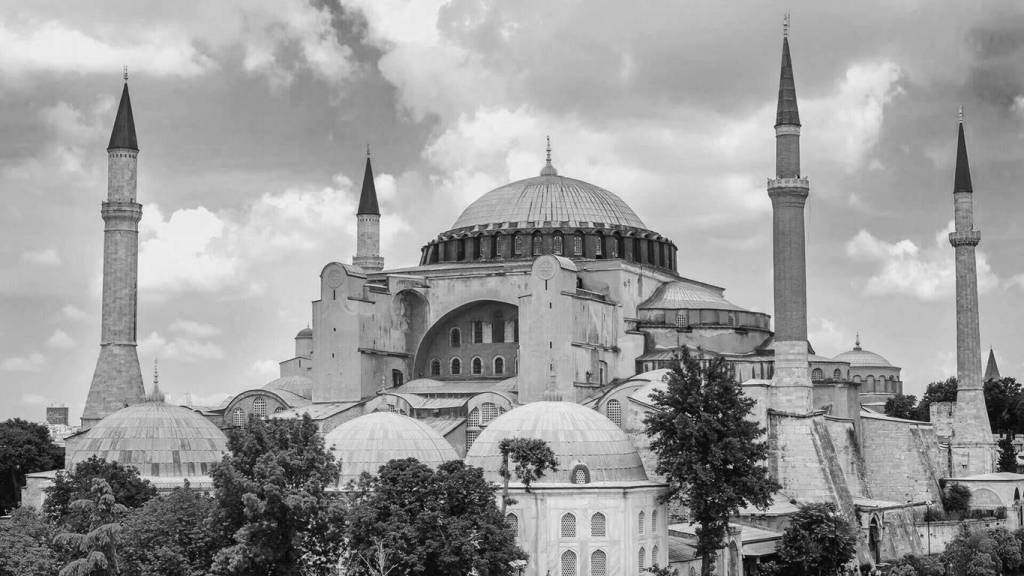
Such process of changes happened extensively through history and in all faiths. We can add that many of the sacred temples of each one of the three monotheistic religions are either built over a pagan temple or a place where a church, mosque or synagogue previously existed. In the past, the metamorphoses of the praying sites were usually the product of war and conquests. Once the battle was over, many temples ended up simply destroyed but, interestingly, others not. It seems clear to us that there is an obvious ambition of the conqueror to overtake the symbolic and sacred value of the site by re-using instead of drastic destruction.

In the case of the recent changes in the use of the Haya Sophia or the Kariye Museum (Chora Church), what is shocking is the fact that it was done in the XXI century, revealing a certain archaic power drive.
Independent of the obvious controversy of such a switch, what brings us here is not the political or religious aspect of such conversions, but the fact that a certain typology of sacred space can be easily adapted to another. This gains importance when we think that in most cases, by the time such transformations occurred, religions were living in utter antagonism.
More in Common than we think
It seems to us that worshipers are willing to accept that the sacred aspect of the space does not come just from who built it and for which creed it was originally erected. If, at the same time, such acceptance comes from the consummated act of a country’s overtaking, it also means that the building and the space itself serves perfectly its purpose, beyond beliefs. So this means that a common denominator exists when it comes to religious spaces.
Many aspects generate this convergence. Some of them were pointed out previously, but also the fact that the three monotheistic religions follow each other chronologically – Judaism, Christianity and Islam – thus creating interdependences and assimilations even at the architectonical level.
Two Church-Mosques
We bring here two examples of small (when compared to Haya Sophia) orthodox churches in the city of Ayvalık that are nowadays being used as mosques. In them we can observe the small adaptations that were made so that the Islamic liturgy could take place.
Ayvalık is a city lying in the shores of the Aegean Sea, in the west coast of the Anatolian peninsula, some 400km southwest of Istanbul. Its population was mostly Greek until 1922. It is only in the aftermath of Turkey’s Independence War that the Greek population is sent to Greece under the Convention of Exchange signed in 1923 by the two countries, in Lausanne.
Two of its most important churches were converted and adapted into mosques in the sequence of the departure of the Greek population. Today they are now known as the Saatli Mosque (The Mosque of the Watch) and the Çınarli Mosque (Mosque with Maple trees).
The Saatli Mosque
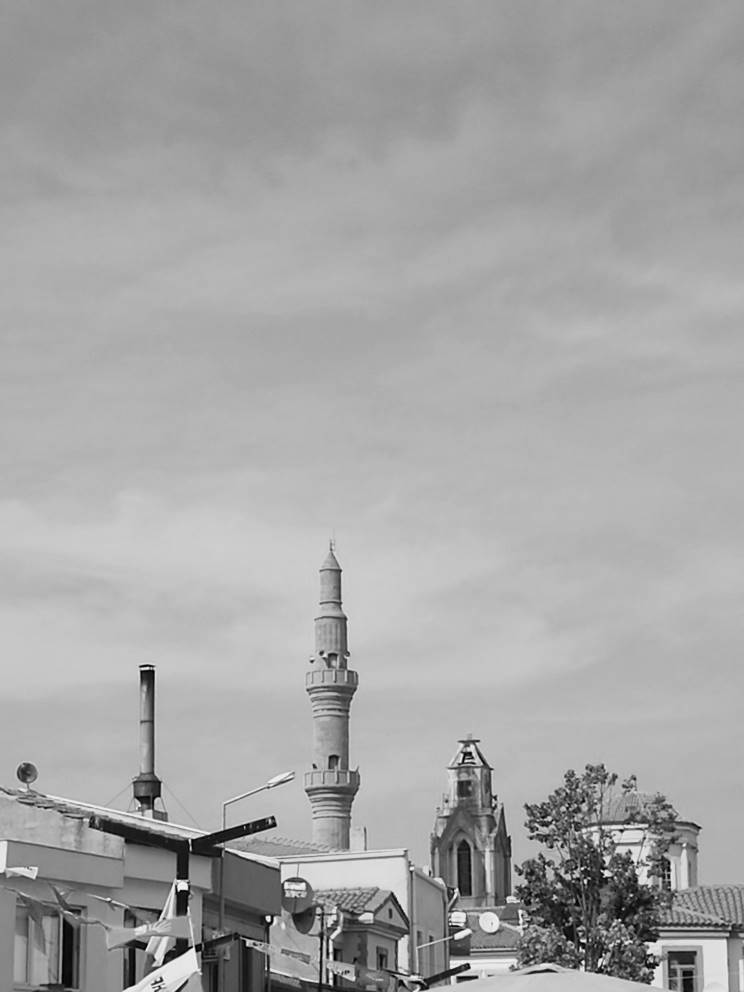
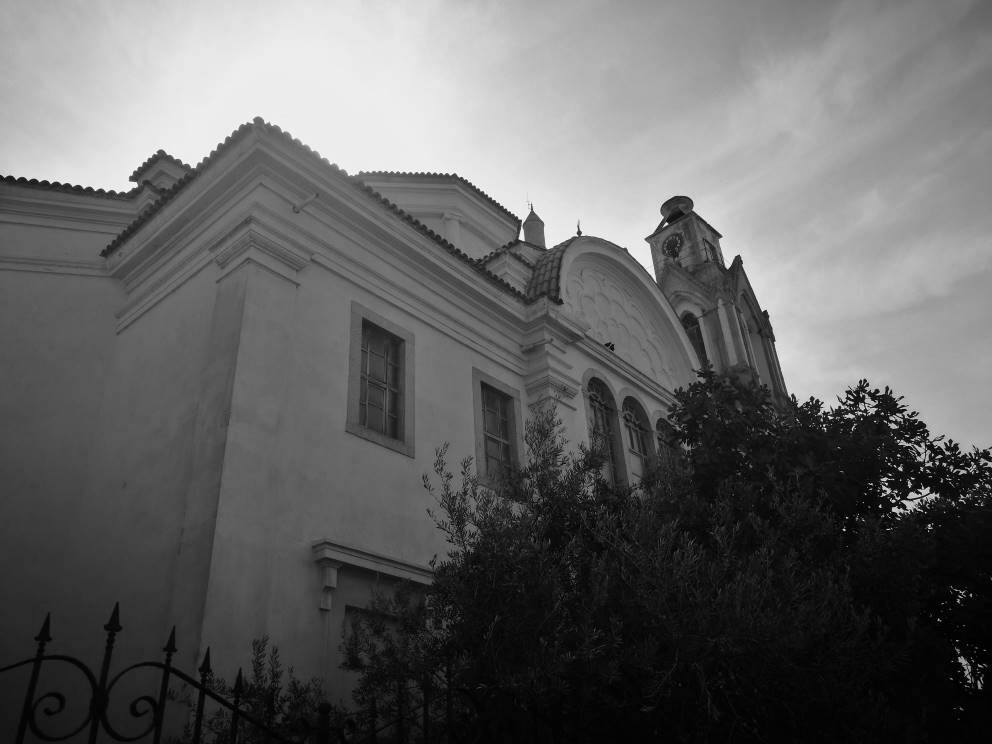
The original name of this Greek Orthodox temple was Ayos İanni (Saint John) church. It was only some years after the proclamation of the Republic of Turkey that in 1928 the church was transformed into a mosque. What gave the new name to the temple was the clock/bell tower that makes the building standout from the rest of churches in the city.
The building was erected around 1850 and we are not sure if the clock is an original element or if it was added a posteriori, thus giving the new name to the mosque.
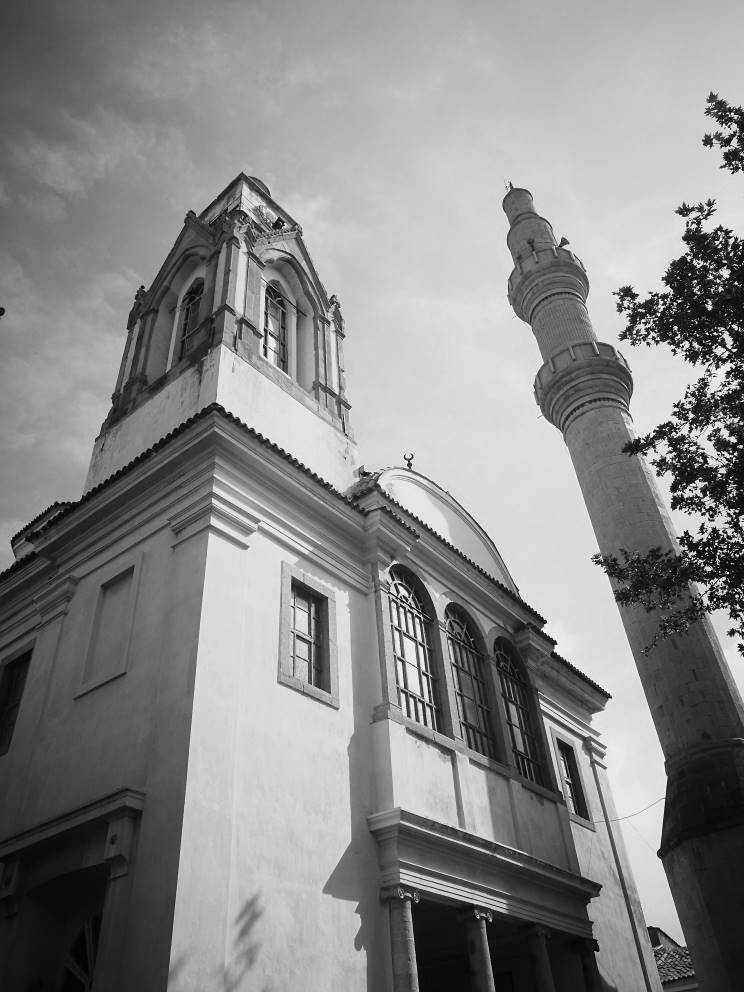

What immediately catches ones attention, either close or at a distance, is the competing presence of the clock tower and the minaret added to the main façade, fruit of the conversion. It is a case of an architectonic pleonasm, where both elements play the same role in the buildings formal grammar. The difference is that the minaret is an autonomous object placed close to the façade, on the opposite side of the clock tower, meaning that the integrity of the building was preserved as much as possible. Nevertheless, the object is very much an outsider to the pre-existing whole. Its presence unbalances the original setting of the main entrance by creating a quasi-symmetric composition, which doesn’t work.

On the inside, the transformation continues and it’s immediately perceived when one is confronted with the absence of the main altar at the presbytery. At first, and even for a non-believer, this is somehow shocking and it takes a while getting used to that absence. This is followed by the covering of the floors with a carpet designed with diagonal geometric patterns, which purpose is orienting the faithful towards Mecca. Since the church is oriented from West to East, the mirhab niche is located in the south façade. The relocation of the key point of devotion from the East side (the former place of the altar) to the South (place of the mirhab) and the carpet pattern distort the original logic of the space but simultaneously seem to enrich it.

In the end, the result is quite interesting as one acknowledges this juxtaposition of principles, forced in by the practical aspects of the Islamic ritual into the delicate space of the original church.
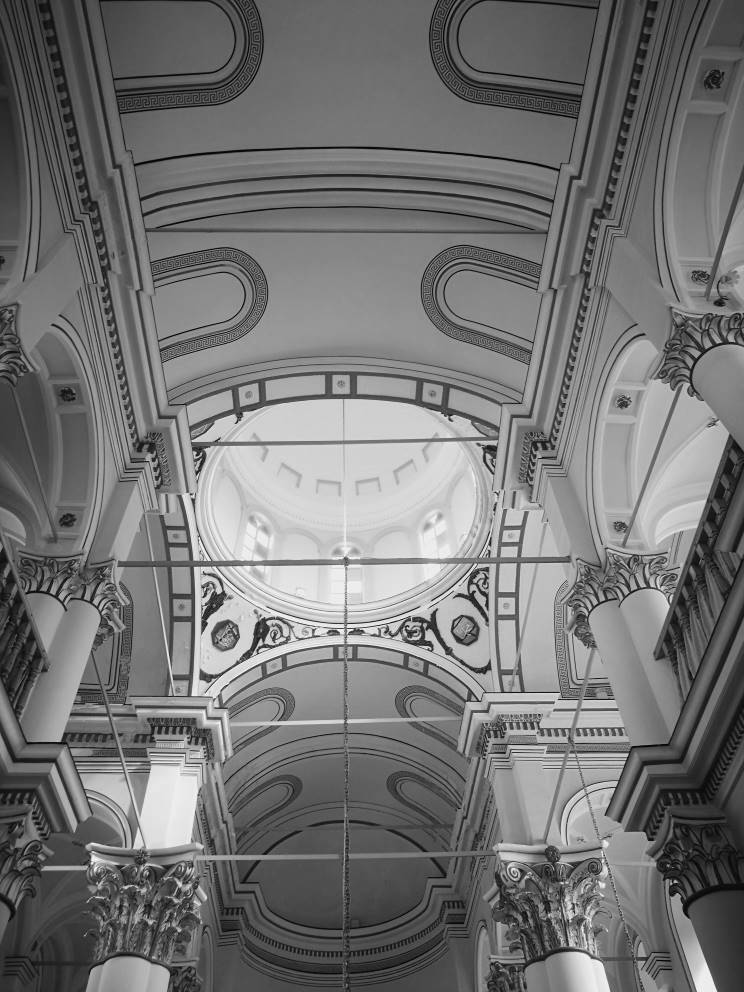
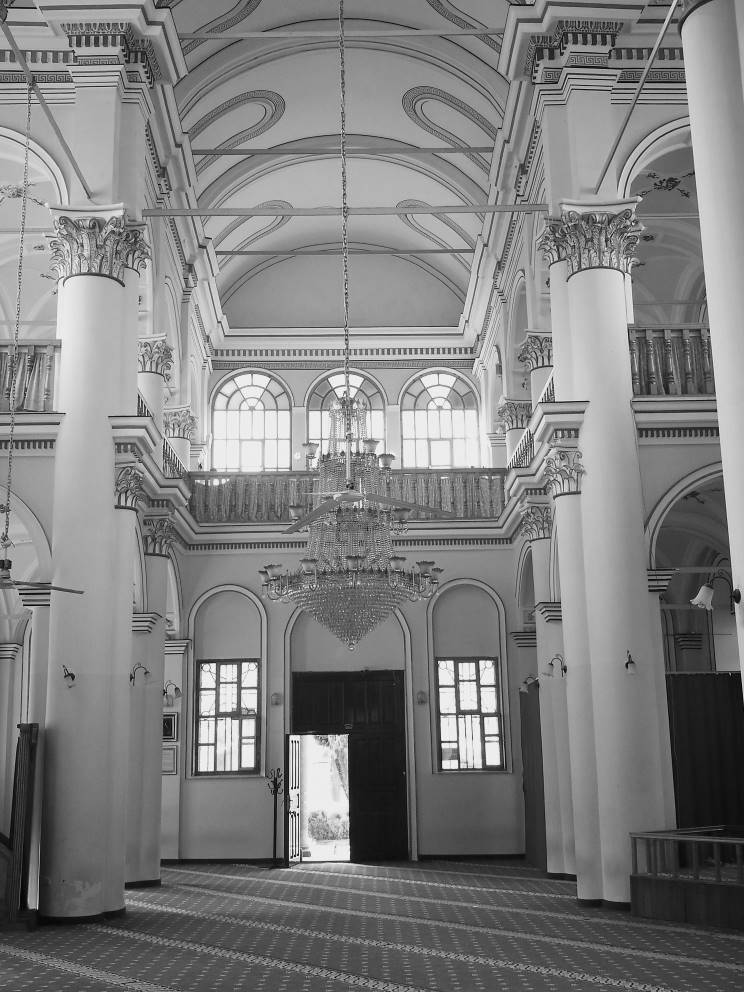
As the representation and adoration of icons is forbidden in the Muslim religion, all of them were hidden behind a layer of white painted plaster. This confers the space with a sense of simplicity that probably didn’t exist when it was a church, reinforcing its strength as a spiritual place. The numerous low and high windows flood the room with natural light, aligning the atmosphere of a typical Ottoman Mosque and this Orthodox Church.
The Çınarli Mosque (or Alibey Mosque)
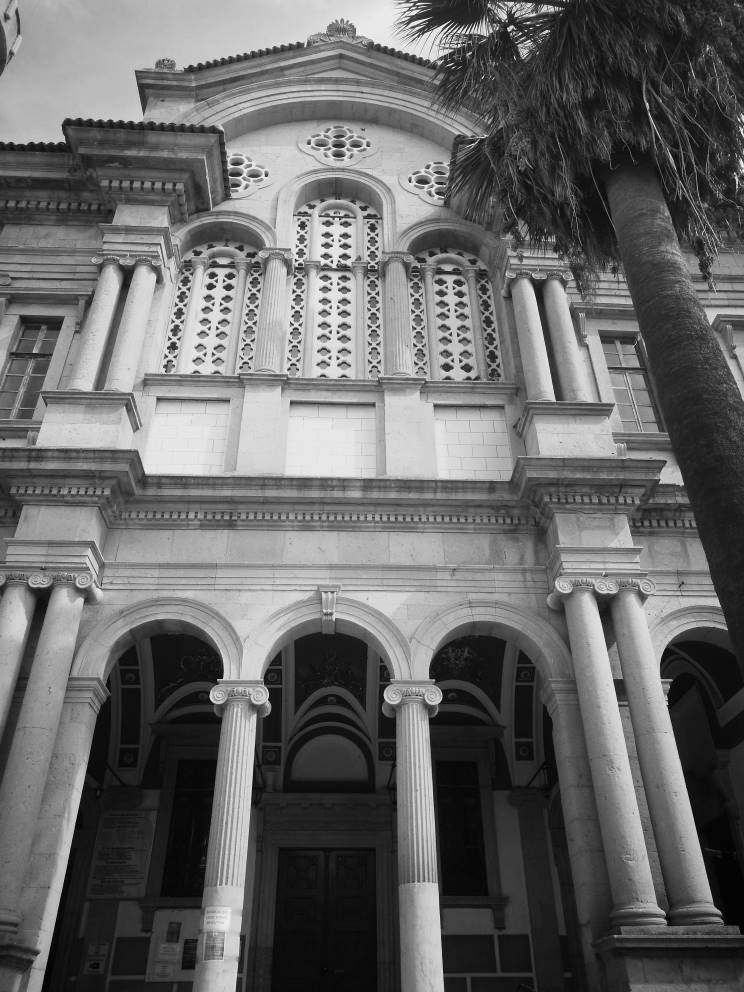

This building is considerably more opulent then the Saatli Mosque and it was the most important church in the city. Completed in the 1790’s it was dedicated to Ayos Yorgis (St. George) and adapted into a mosque in 1923.
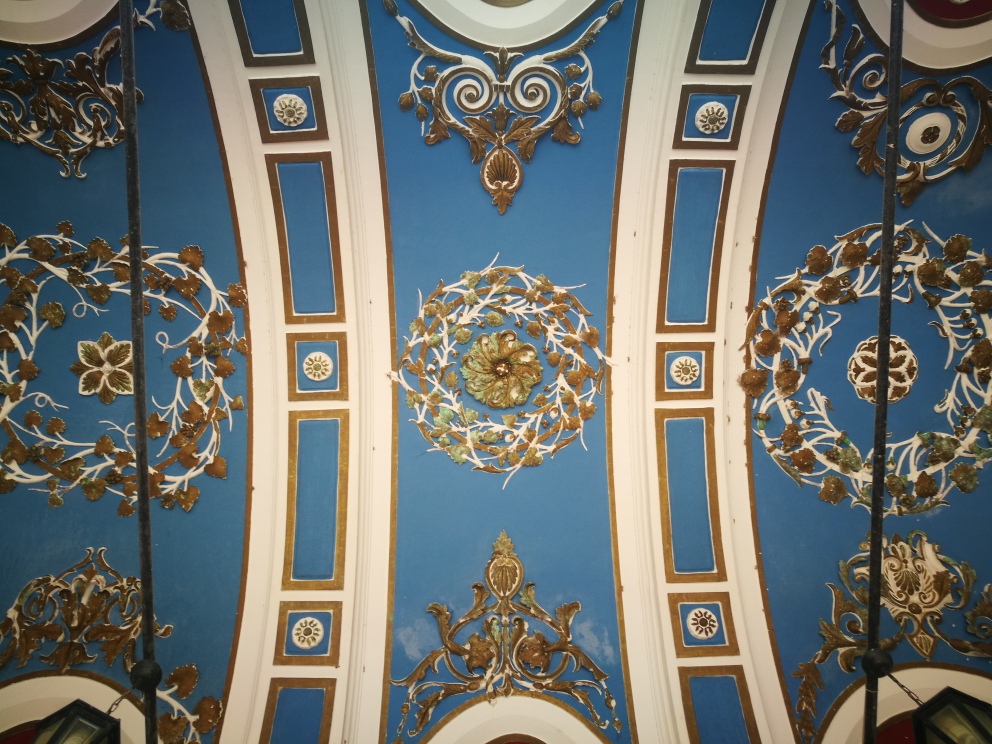
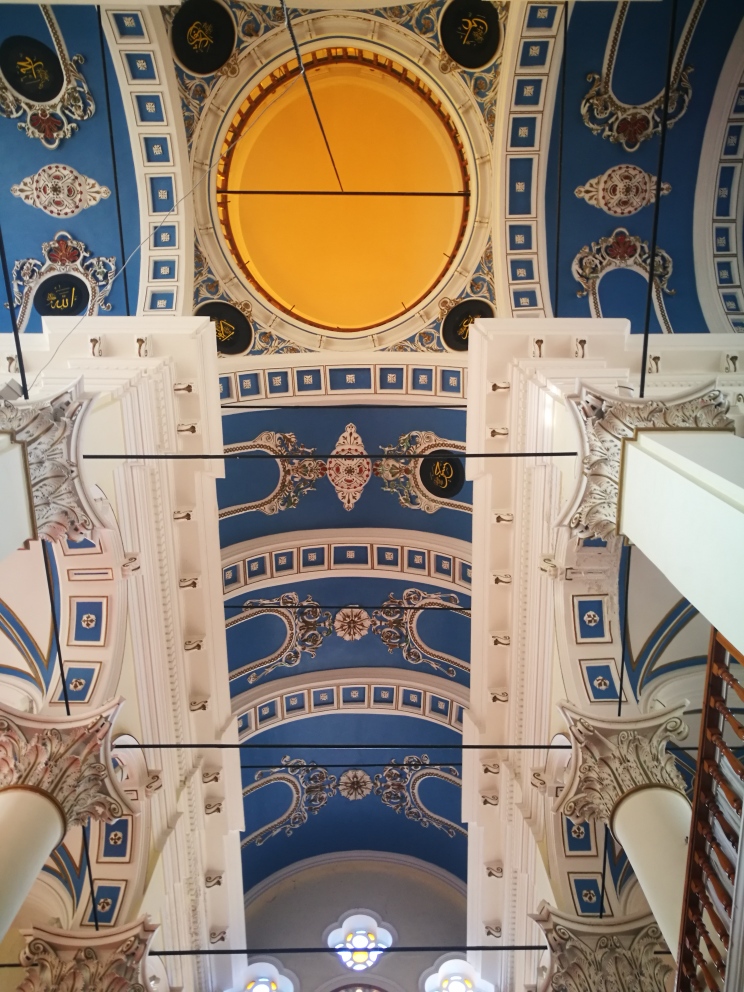
As it is costume, the icons and frescoes were (unfortunately) covered or replaced with koranic verses. The usually over decorated walls and ceilings of the orthodox churches are now painted with plain colors and simple contouring frames. Besides the delicate Corinthian capitals of the columns, the only element that gives us an idea of all the rich details that filled the rest of the interior in the past is the baroque enclosed altar on the eastern side of the three naves. This wall was probably the Iconostasis of the temple but here the icons had much less importance than the stone and painted stucco decorations.
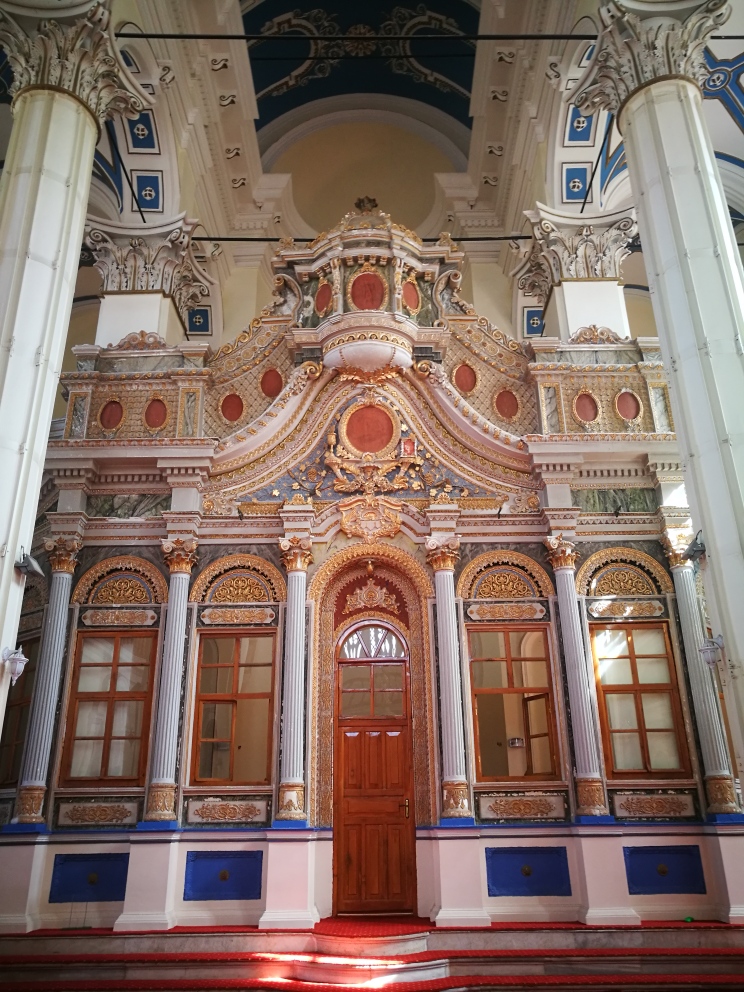
Again here, the orthogonal principles of the space are disrupted by the floor covering carpets indicating towards where the believers should kneel. As the altar is still there, reinforcing the axiality of the nave, this time the new geometric pattern feels a bit odd.
It’s interesting to see that the access to the building is now made through the North Façade where a secondary entrance is located, instead of the main door, in the West side. This is to give direct entrance towards the mirhab and the minber as it is usual in most mosques.


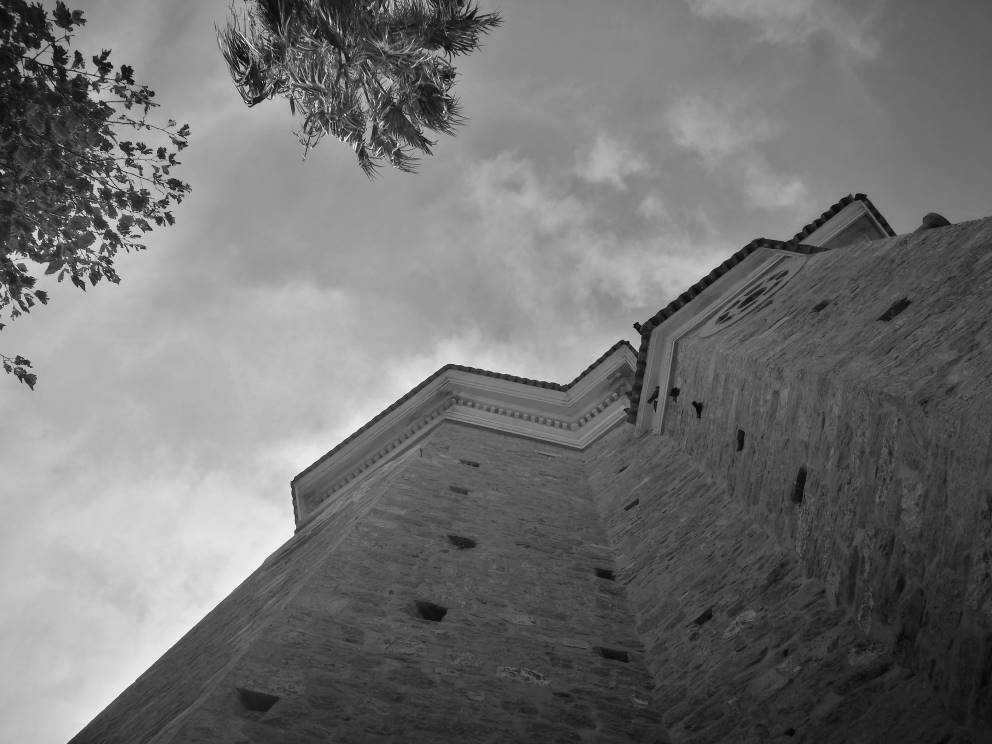
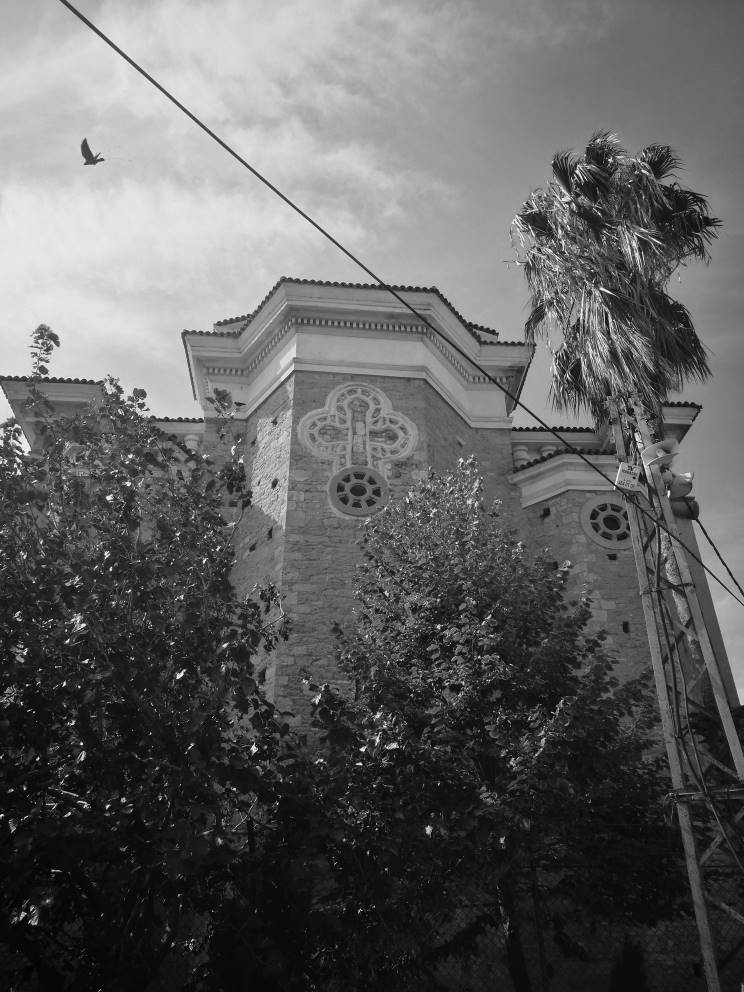
Contrary to what happens in the Saatli Mosque, the placement of a minaret in the main façade of the church seems even adequate as it introduces an elegant formal tension with the heavy body of the building. A vertical exclamation, pointing to the sky, is attached to the stone-built structure that seems firmly fixed to the ground.

The austere exterior walls of the church can also relate with many of the mosques existing in Turkey (mostly prior the XVI century), with its unpainted natural stone masonry façades revealing the honesty of the construction systems.
Spirituality Reigns
These two buildings stand, speaking of the past and of the suffering of those who had to leave their homes abruptly and the violence behind such processes of overriding others beliefs. But they also tell us about a peaceful adaptation and appropriation of religious space by down to earth worshipers.
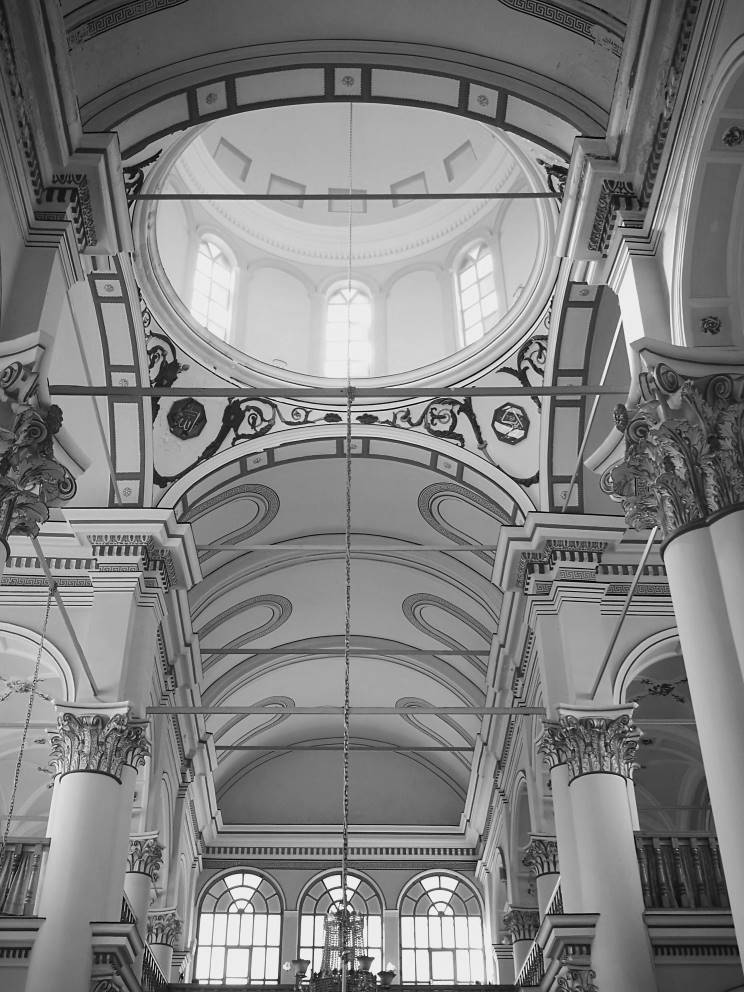
For the architect, it is hard not to notice the discrepancies and nuances of the transformation operated over these temples. Nonetheless, it is clear to us that the aspects that grant an atmosphere of spirituality, characteristic of cult places, remain intact.
We dare to say that if we drain temples of its surface of symbols, hermetic motifs and ritualistic attributes, leaving only the core elements that structure and define the space, we could end up with an ecumenical place of worship. Something very few dared to think about through history.
We dare to say that if we drain temples of its surface of symbols, hermetic motifs and ritualistic attributes, leaving only the core elements that structure and define the place, we could end up with an ecumenical place of worship.
Something very few dared to think about through history.
 arkollective.com
Great research about one of the most beautiful buildings of the world
Full of historical layers with strong messages .
Many thanks João for your research’s in Arkollective
LikeLiked by 1 person
Thanks José, for your encouraging words!
LikeLike