
Locus
The Aegean region of Anatolia is, in terms of historic built patrimony, probably one of the richest in the world. Long before the Bronze Age, humans have been settling in the coasts of this part of the Mediterranean Sea and some of the places that drove the western civilization to the peaks of development are placed there. They are the proof and symbols of the foundation of a new era, that of contemporary humanity.
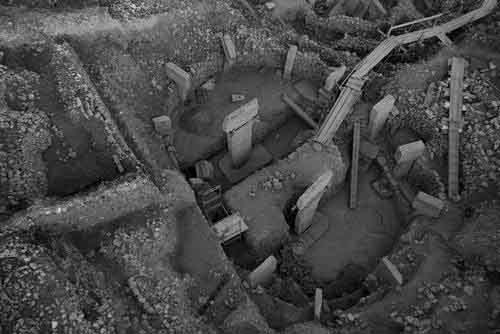
To put us in context, we might as well extend our horizons to the rest of Asia Minor, because the reason some of those cities flourished and thrived relates to the fact that several civilizations fought, traded and shared their legacies in these lands. The Anatolian peninsula is home of the two most ancient human settlements known to man until now: Göbekli Tepe (9600 BC) and Çatalhöyük (7400 BC).
The Luwians-Pelasgians, the Hattians, the Hitites, the Ancient Greeks, the Phrygians, the Lycians, the Sumerians, the Persians, the Byzantines, the Seleucids, the Romans are some of the civilizations that transformed and shaped this region. What these cultures produced, built, wrote and adored here had a tremendous impact in the rest of the world. Many of the traces of their passage through this land are still visible and can be visited nowadays.
Two Ancient Cities
This post dwells around two different ancient cities in the west coast of Turkey. From north to south, Troy and Assos. Their origin comes from Pre-Hellenic times, they thrived and felled many times and are now ruins that were thoroughly studied and are preserved in different states of conservation.
These two cities where rediscovered in the 1800’s when archeology had its great resurgence and museology became so important, mostly due to the processes of colonization undertaken by some European countries. In the romantic period, countries like Germany or England were looking forward to expand their collections in a true race to host the best museum showcasing the outreach of their empires.
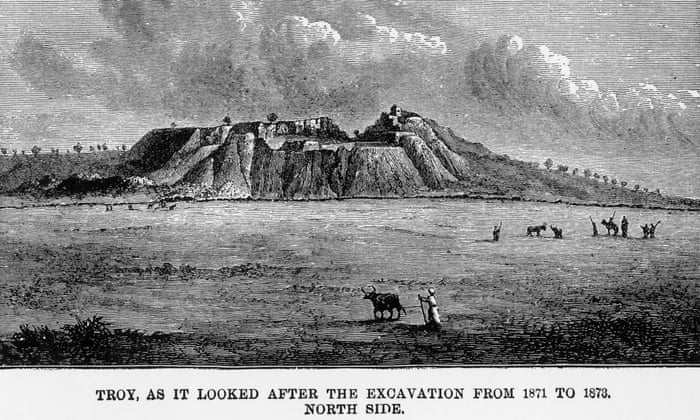
In those years, archeology became a real trend but, most of all, a profitable business. Private investors, behaving like mercenaries in the search for treasures in places known for its rich history – like Italy, Greece, Egypt or Syria – would buy large portions of land and sell their discoveries to museums, crown or state.
Many of those regions were placed in the old Ottoman Empire. With its power lingering in the XIX and XX centuries, the Ottomans accepted to sell and lend large areas for others to excavate and study. It is the opinion of many that they were practically looted by foreign powers and deprived of a great part of their rich patrimony. One example of this is the Pergamon Museum in Berlin, where some of the best pieces of Greek and Roman architecture are displayed thousands of kilometers from their original place.
Troy
Nowadays, as one winds through the small roads of the province of Çanakkale, the strong wind fills the air with the intense smell of olives and fig trees. The extraordinary blue of the Aegean Sea contrasts with the different tones of green and the sun burned yellow of the wheat fields. It feels like this place has been like this forever… Only the massive modern windmills, popping out behind the mounds, pull you out from these dreams of other millennia.
The once known as Troas peninsula is now famous for its new wineries, excellent sea food and trendy tourist destinations – like the Bozcaada island. Together with the Thracian region on the European coast, they form the Dardanelles straight, a place of great historical importance due to its strategic role for keeping Istanbul safe from the attacks made by the Allies during World War I.
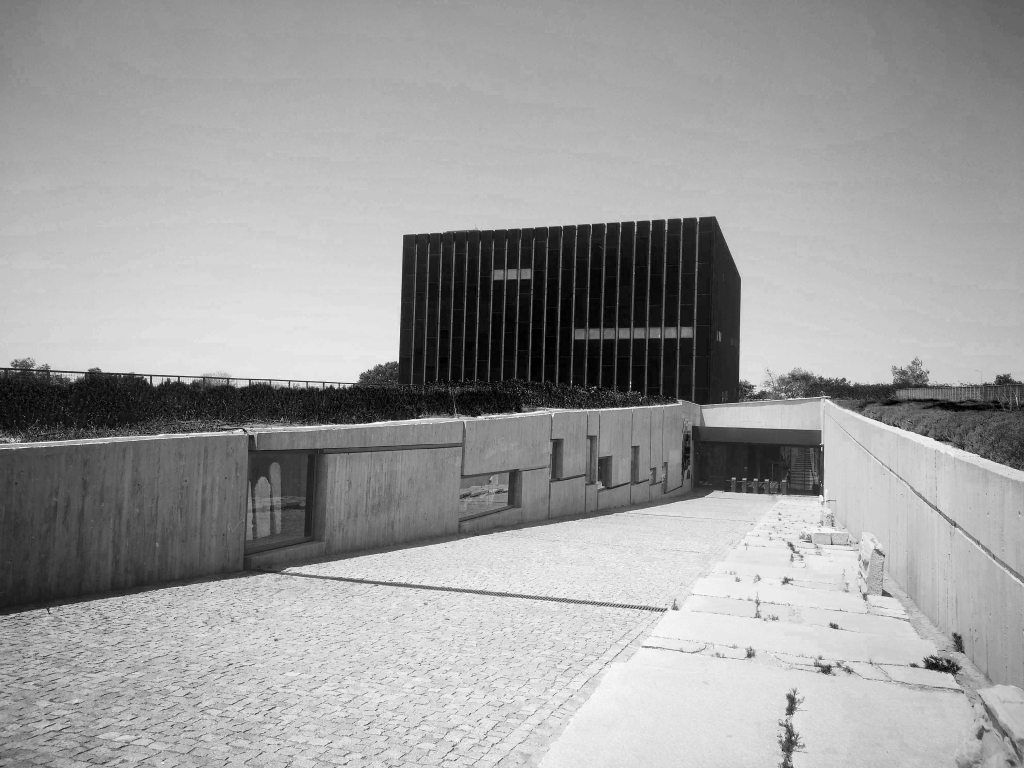
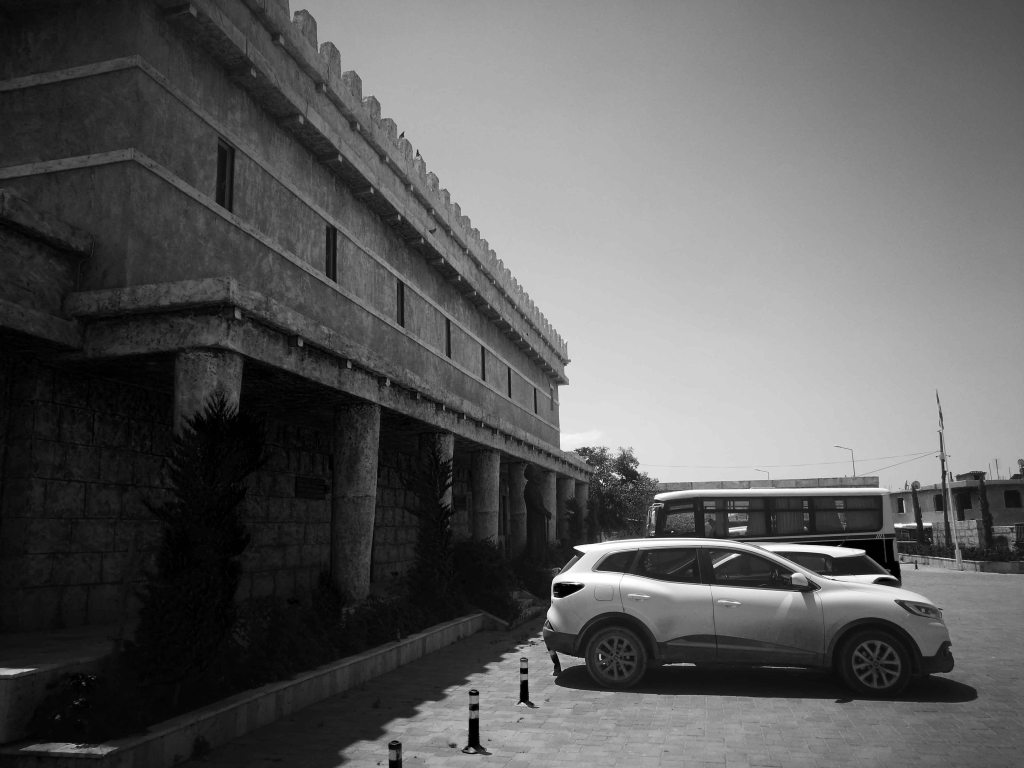
As one approaches the Troy archeological site we are confronted with two very different visions of modernity inspired by the former: the recently opened Museum of Troy and the village of Tevfikiye which is undergoing through a depressive process of ‘’troyfication’’.
If the first is one of the best public museums built in Turkey during recent years, the second is a disneyfied tourist trap embodied in a perverted vision of a Troy-like village, sponsored by one of the country’s largest oil companies.
The museum displays thousands of objects found during several archeological campaigns. It organizes itself in a modernist ‘’promenade architecturale’’ and starts with a plunge into the underground, as if remembering visitors that all that they will see was hidden and dug from the subterranean depths. From this low point, it ascends and continues in a New York Guggenheim inspired ramp, travelling through the ages and findings of the real ancient Troy which lies just a few hundred meters way. The core of the exhibition is placed inside the cubic corten steel volume that makes the iconicity of the building.
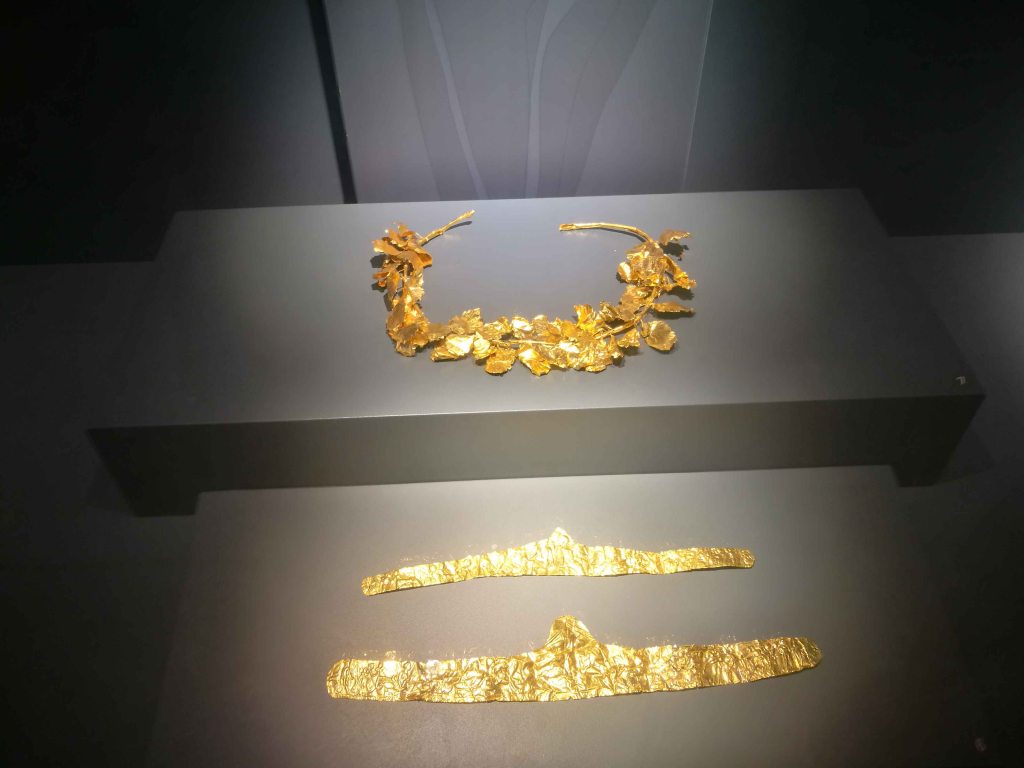
The Hellenic jewelry collection is breathtaking and tells the most of the level of progress of this civilization. Beyond technic development it states an obvious superior sensibility for the sense of beauty.
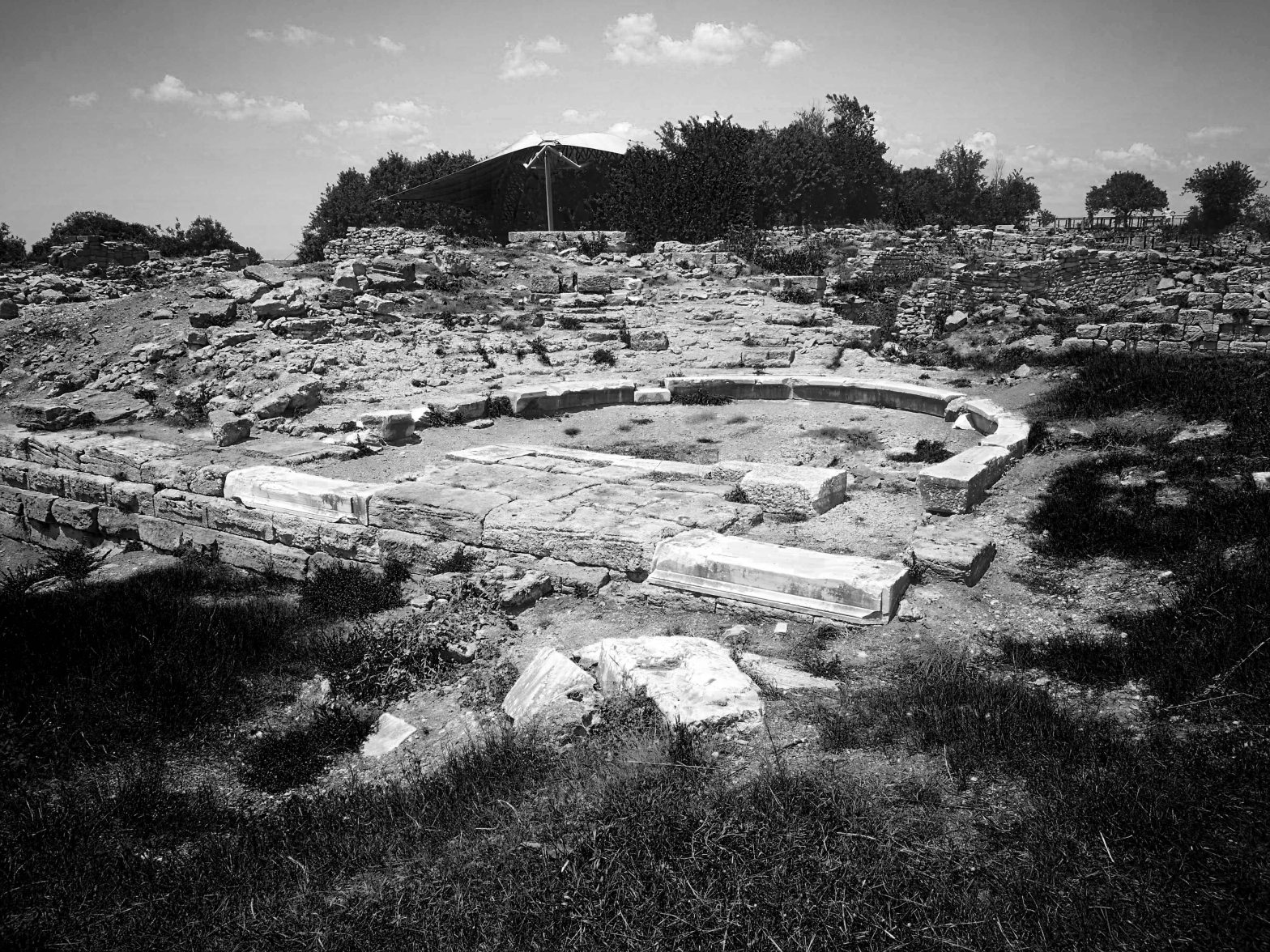
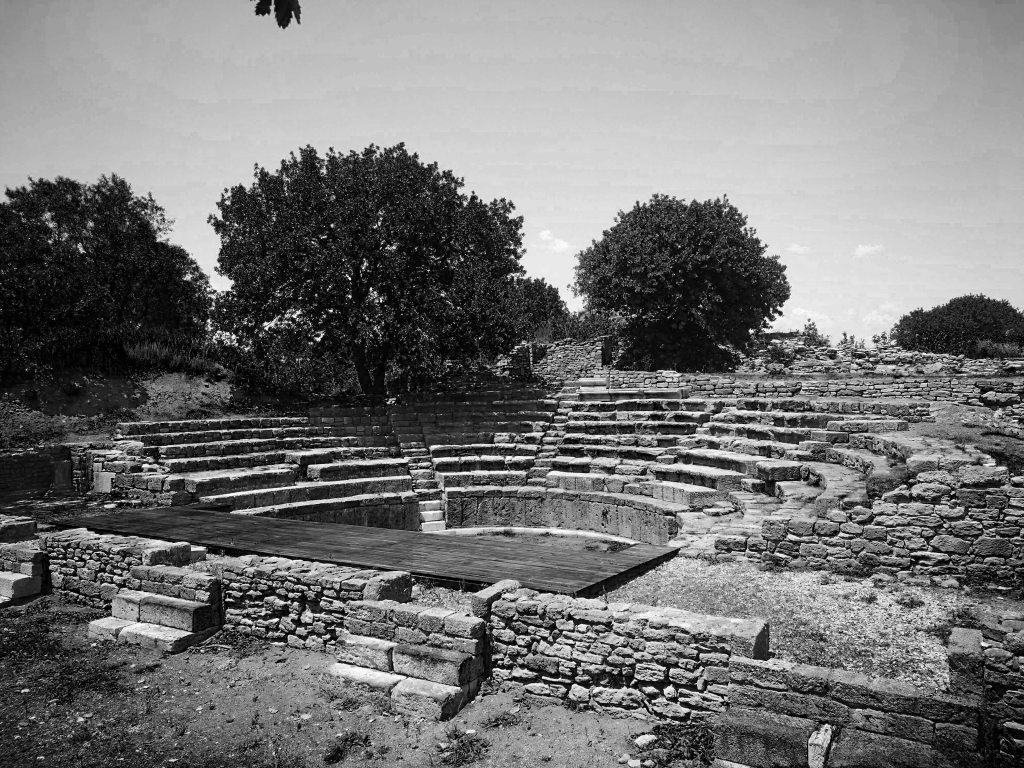
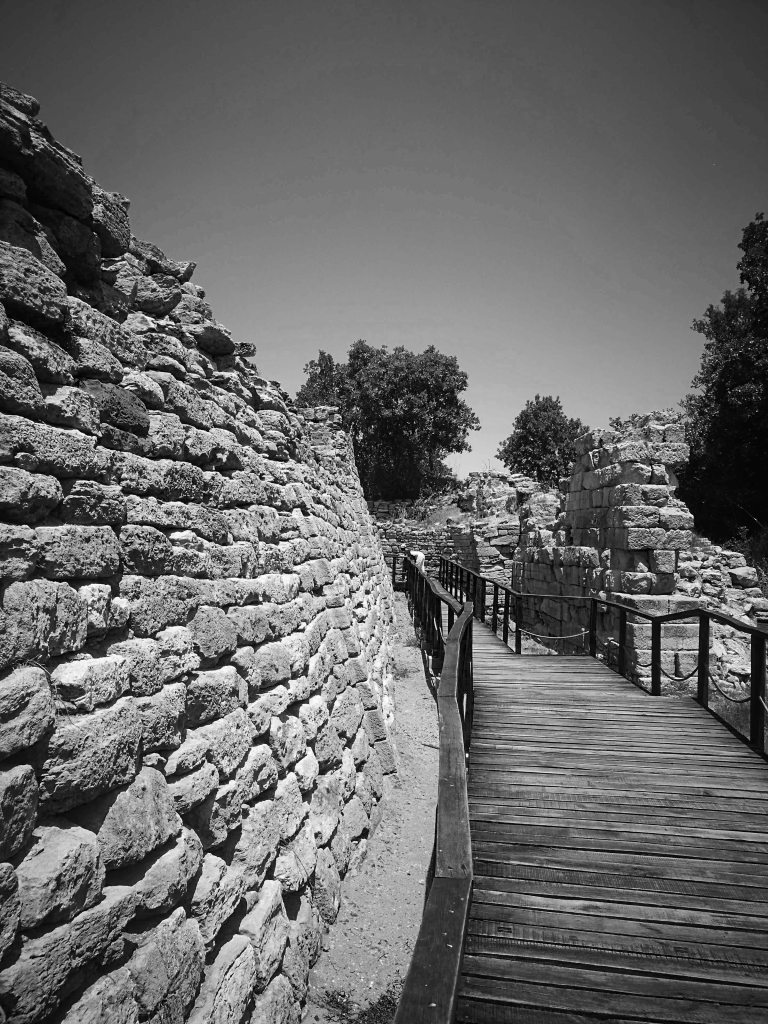
Once in the ancient site, we are welcomed by the inevitable Trojan horse… After this instagramic interlude, one can ‘’dive’’ into the rests uncovered by the controverted Heinrich Schliemann and further archaeological campaigns. Although it is not easy to picture the city structure without an attentive checking of the plans and all explanatory notes with visual reconstructions of the main buildings, one will be easily impressed by the visible parts of the walls or some of the roads that led to this city which had at least nine different stages – from Troy I (2500BC) to Troy IX (500AD).
Deprived of color, with only the hardest materials surviving, most ancient ruins are given the quality of extreme coherence. In Troy, the local lime stone is omnipresent, being part of every construction – roads, walls, houses, amphitheaters – and applied in all sizes, like parts of a living organism, which never stops adapting and growing, as it is uncovered.
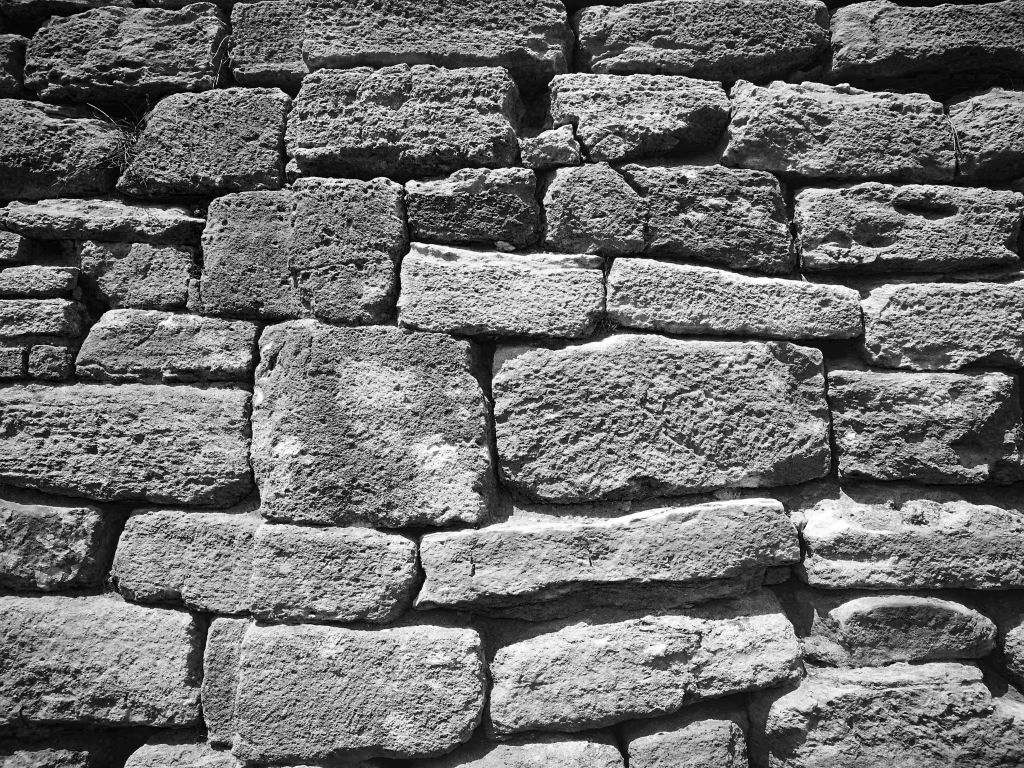
Troy is one of the most important cities in the history and mythology of ancient Greece and this quality lasted for many centuries until today. It is present in Homer’s Iliad and Odyssey poems as well as Virgil’s Aeneid. In 1998 the archeological site was declared Unesco’s world heritage patrimony.
Assos
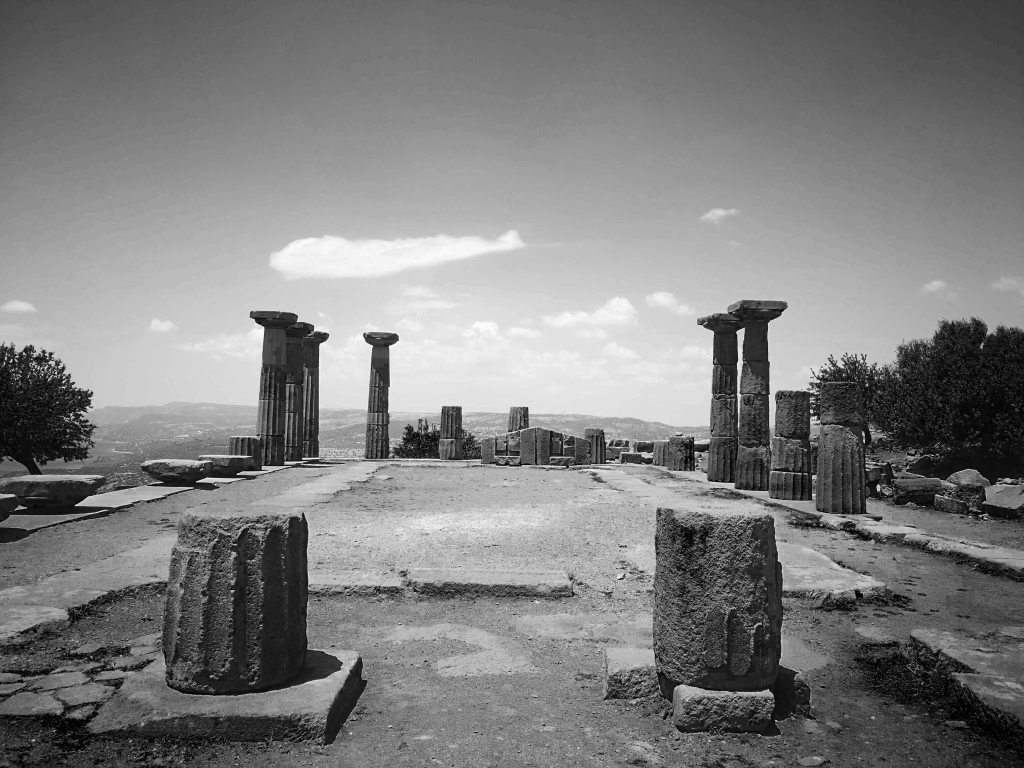
It was only natural that the first human settlements would be placed on high grounds for protective reasons and Assos is like that. On the west side of Mount Ida, the core of the ancient city locates itself in a small hill overlooking the Gulf of Edremit and the Greek island of Lesvos. Through its evolution and mostly with Roman development, the city naturally cascaded towards the seaside.
Assos is all about the relation of its buildings and urban layout with the natural terrain and surrounding landscape. Ancient Greeks were the masters in understanding the importance of the perfect setting of buildings on a site. By establishing the correct relations between volumes and the orientation towards the natural background offered by nature, they could redefine the sense of place which would result in a perfect correlation of forces between the built and the unbuilt.
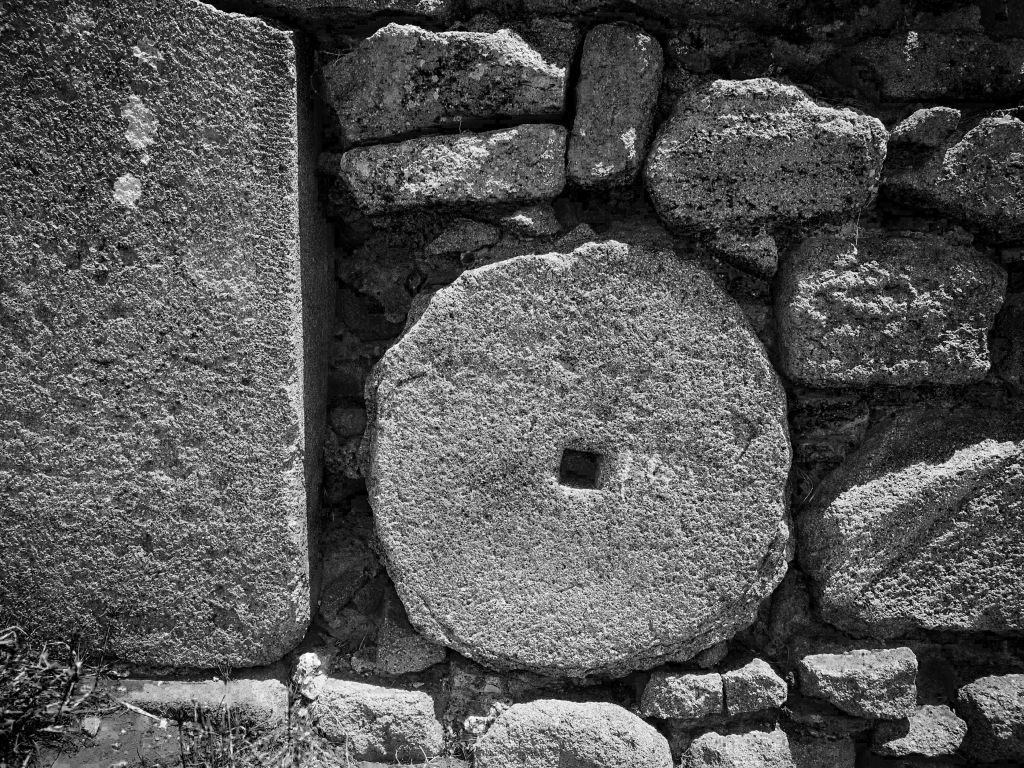
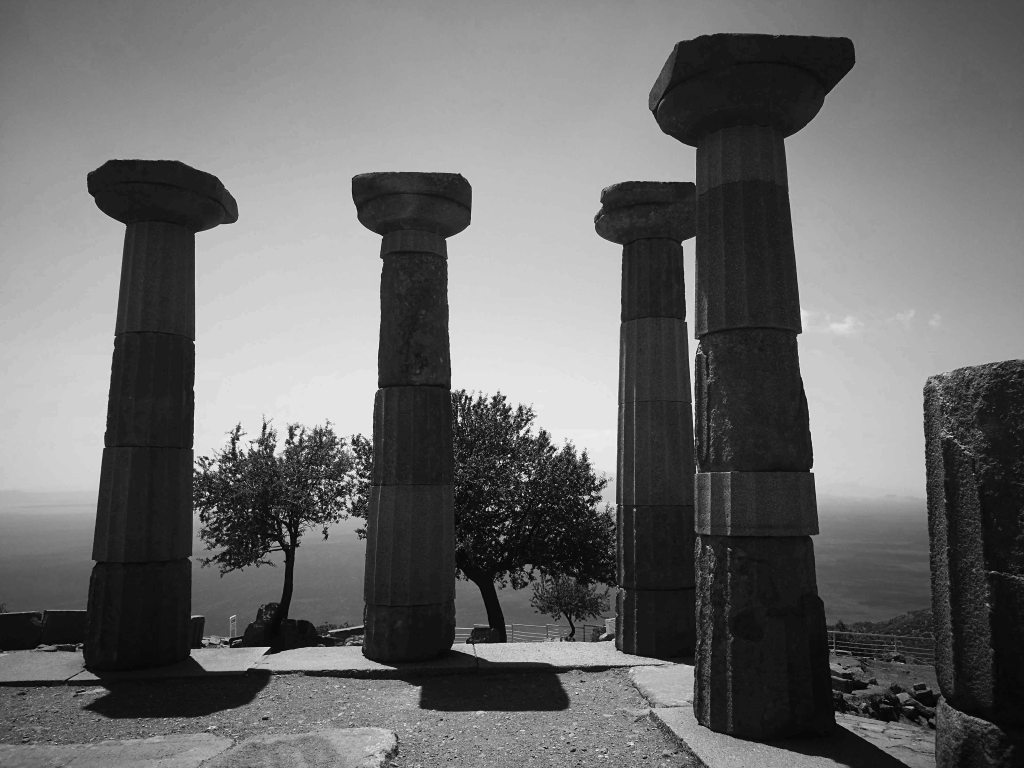
What we see today at Assos are the remains of an Ottoman castle and its walls together with the Greek monuments readapted and transformed by the later Roman occupation. After entering the site gates, one has to climb towards a small Olympus mountain to reach what naturally feels like the core of the ancient city. Slowly one starts to see the Doric capitals of a few large columns, it is the Temple of Athena. It lies parallel to the sea shore, facing south towards the beautiful silhouette of Lesvos. Although the ruin consists only of a large podium and a few columns and shafts, one can immediately grasp the extreme subtleness of its emplacement and why it was chosen to be the place of worship.
In summer days, the temperature here can raise up to more than 35 degrees Celsius and it might be hard to accept that to see the full extent of Assos you have to walk steep down towards the old harbor in the Aegean Sea shore. But one just has to do it!! It is the only way to understand how this city’s public spaces and buildings were constructed in extreme harmony with the topography and views.
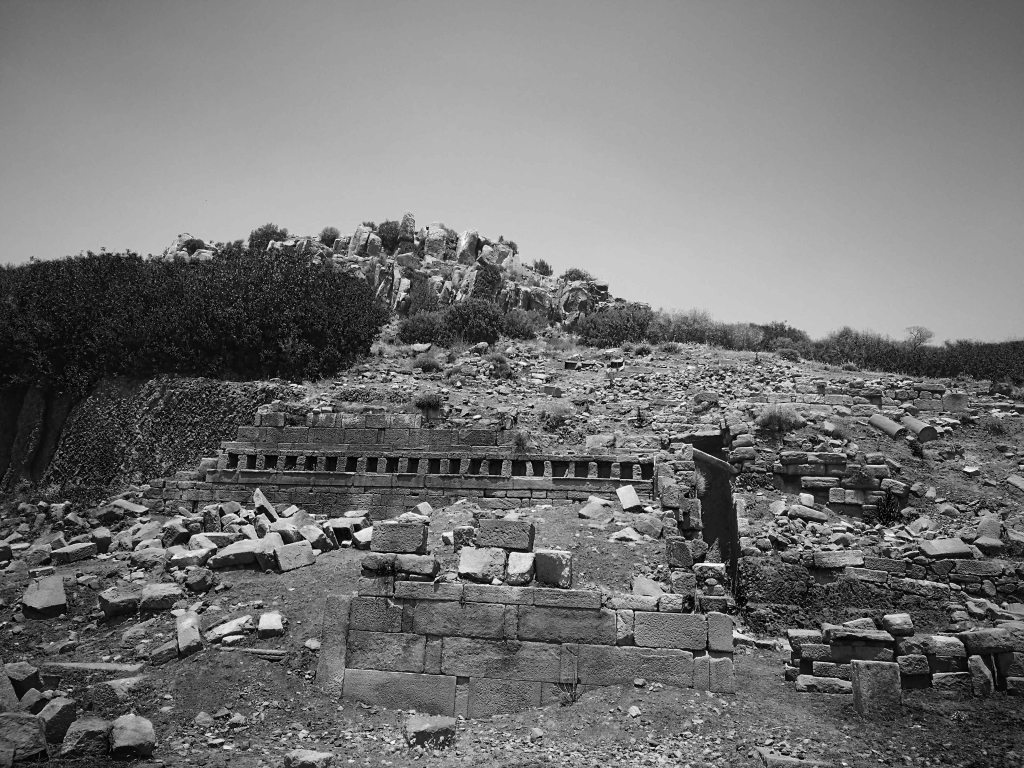
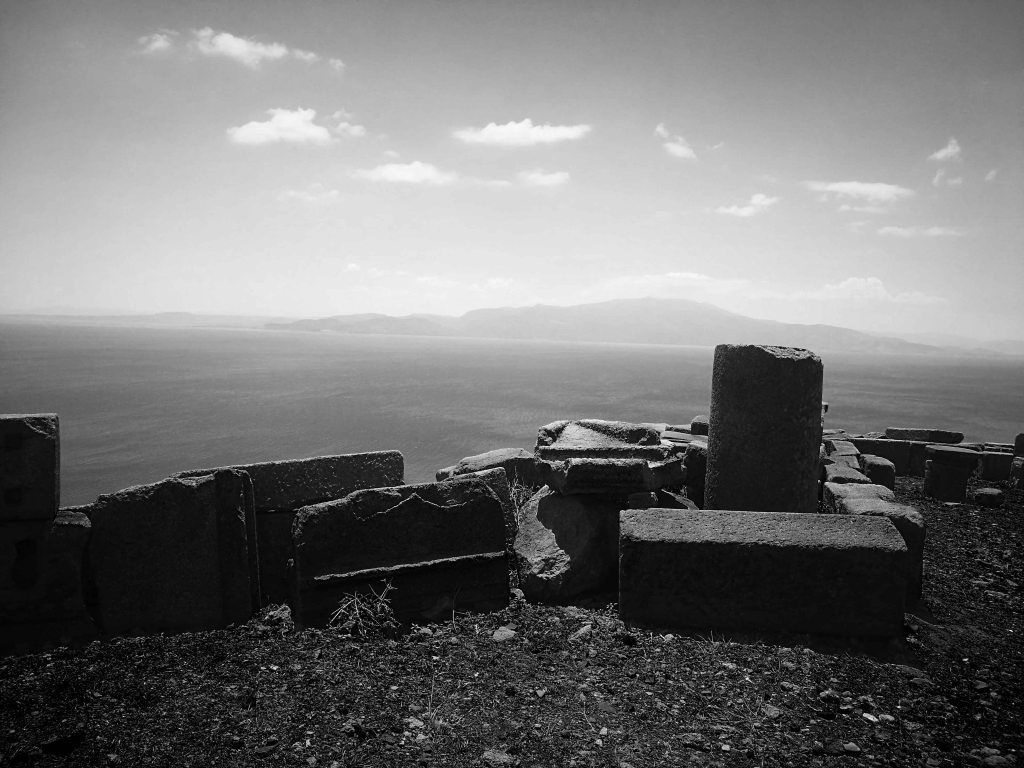
The maximum example of this is the plateau where the Agora was built, at half distance between the top and the coast. Carved directly from the mountain, the public space is an enormous void opening partially towards the sea and the sheltering sky above. On the north and south sides, almost parallel to the sea, laid two stoas – large covered structures for sun and rain protection where merchants could sell goods. A temple and the bouleuterion (council house) framed the space on the east and west sides, where the gates of the main street are were also placed. Further down the hill, one can find a quite well conserved theatre built using the slope of the terrain and facing the sea, as it was usual by the Greeks and Romans.
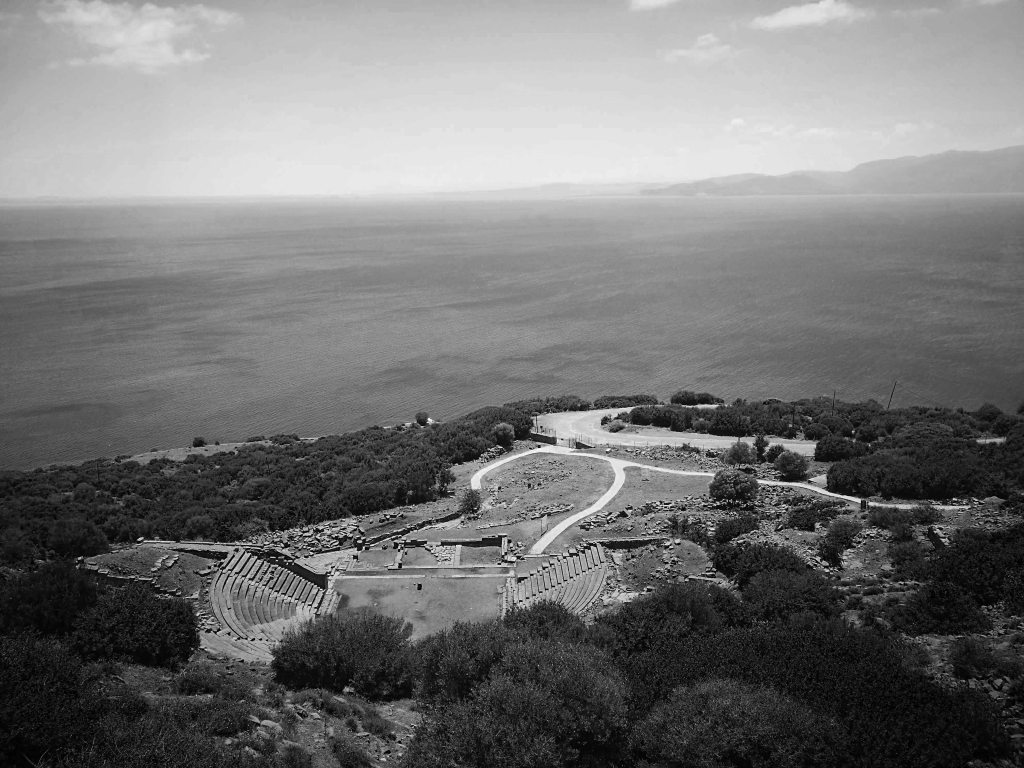
To end this staggering promenade is the old port which is actually the reason for the development of Assos and why it thrived through the centuries, either in the hands of Greeks or Romans. It is the right place for a swim and a cold beer to recover from the extreme heat exposure and get ready to climb back again.
Adding to Assos magical atmosphere is the fact that it was a place of passage for several eminent figures of the universal culture. The philosopher Aristotle who lived here for three years (347-344BC), founded an academy and wrote here some of his books and also, centuries later, in VI AD, the Apostles Paul and Luke who passed and travelled through the city.
In conclusion, every step one gives in these two cities is a good reason to learn, respect and admire what humans were creating thousands of years ago.
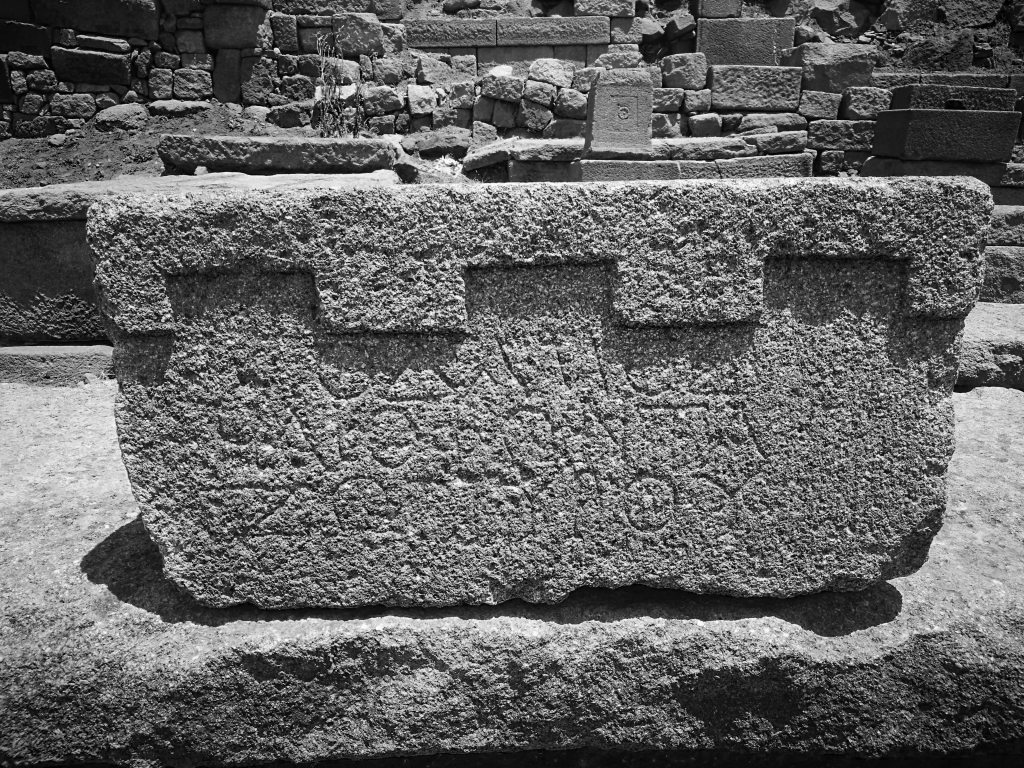
All photos by Joao Cruz Neves, except the ones indicated.


One thought on “Troy and Assos – Placemaking, in the past”