
(Designing and Building for the Second World War)
Did you know that the Pentagon, built in the 40’s for the USA Department of Defense, is still one of the largest office buildings in the world? With close to 600,000 square meters and 26 km of corridors, it took the record time of just eight months to be built.
Or that Plexiglas, Laminated Wood or Sandwich Panel technologies were mostly developed during the Second World War (WWII) times, when a massive industrial effort took place to push the capabilities of both confronting sides with the objective of winning the conflict?

The WWII was one of the decisive factors that pushed industrial production of weapons, consumption goods, construction materials or building technology to a level that had a massive impact in the following decades and coming generations.
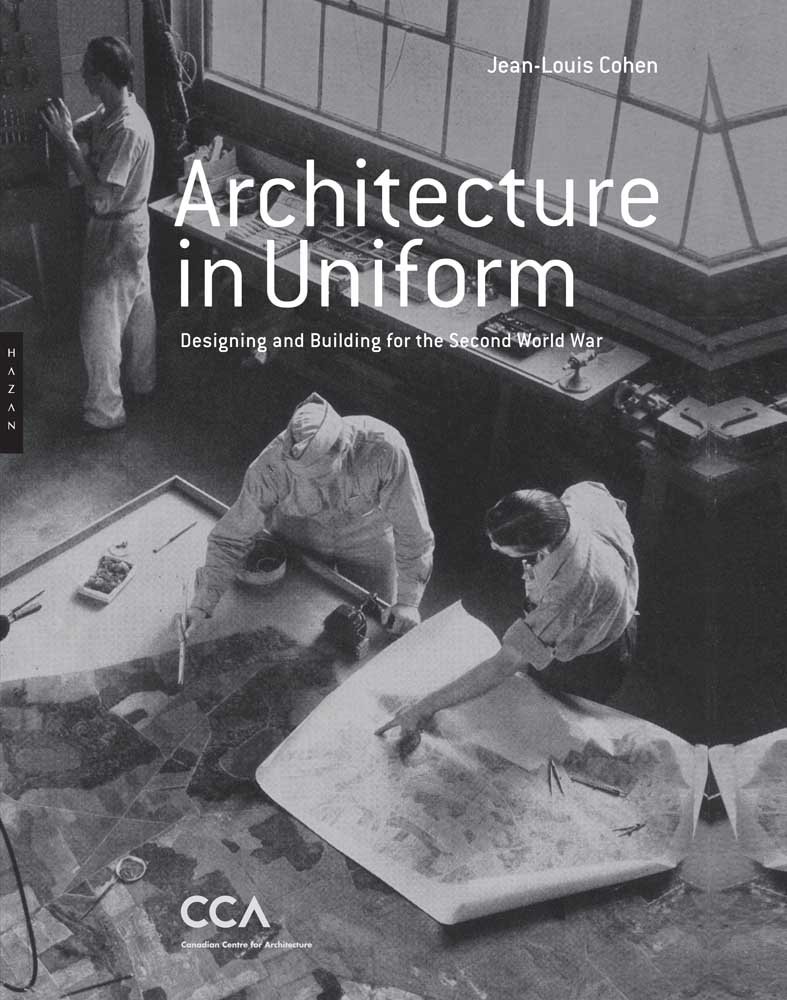
Architecture in Uniform is a research-book, by the French architect and architecture historian, Jean-Louis Cohen, which consists of the investigation of the role undertaken by architects during the WWII depicting many of its lasting consequences.
The author defends that the part played by architects during the conflict was as important as that of scientists and engineers, given its strategic capability to organize, plan and develop design solutions essential for the war process to succeed. And this, on both fronts, of course.
Before the war ended and the reconstruction of entire countries and cities became necessary, architects were involved in designing new, much larger and complex factory facilities – for armament, aviation, cars, textile, etc. Given the increasing number of workers due to the war effort, new residential areas had to be planned from scratch and new institutional buildings were designed to accommodate the departments dedicated to war planning and decision making. We should also add the solutions created specifically due to the conditions of war times, like underground facilities, camouflaged constructions or entire fake cities to deviate the enemy’s attention.
This abrupt demand for quick and technologically complex buildings generated dozens of new by-products which revolutionized construction methods and systems until today.
Prefabrication had an exponential growth during these times, when materials like the gypsum board or the sandwich panel were used to build houses. Their use also involved bringing together new technologies and derived in the creation of composite materials, something not much in use by then, that meant a true revolution in the industry.

Another good example is laminated wood which covered the increasing shortage of steel – used mostly in weaponry – and was an excellent substitute to build very large and light beams for industrial building structures. This new technology also had an impact on the chemical industry through the creation of new resins and adhesives necessary to assemble and glue the laminated systems.
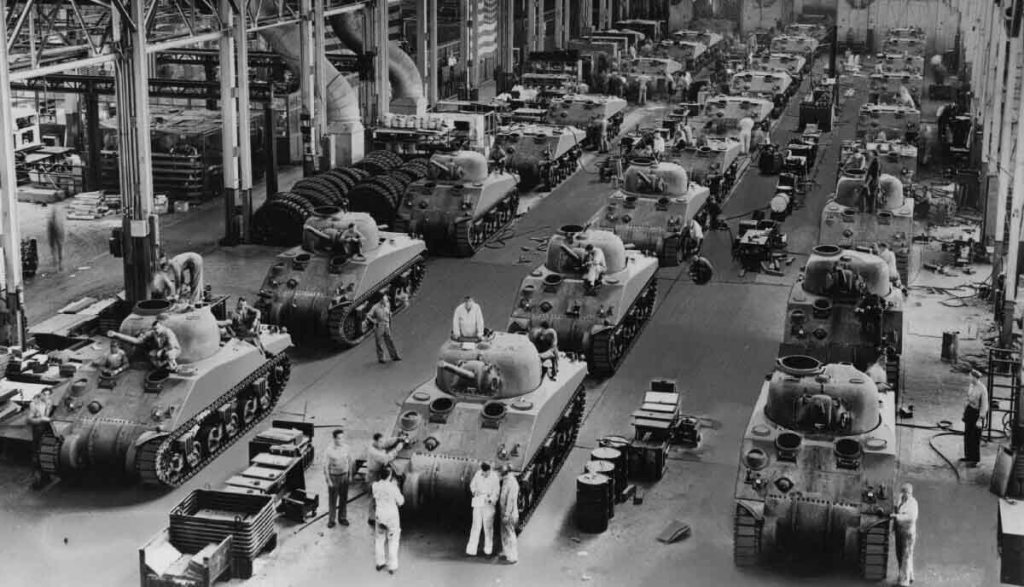
Several important names of the XX century modern architecture like Le Corbusier, Walter Gropius, Mies Van der Roe or Charles Eames were involved in the design of facilities or developing new solutions related with the needs generated by the conflict. But the book also names lesser known architects like George Bergstrom, responsible for the Pentagon project together with David Witmer, or the first ‘’mega’’ design offices like SOM or Albert Khan Associates, designers of some of the largest buildings in the USA, like the Detroit Arsenal Tank Plant or the Chrysler Tank Arsenal buildings.
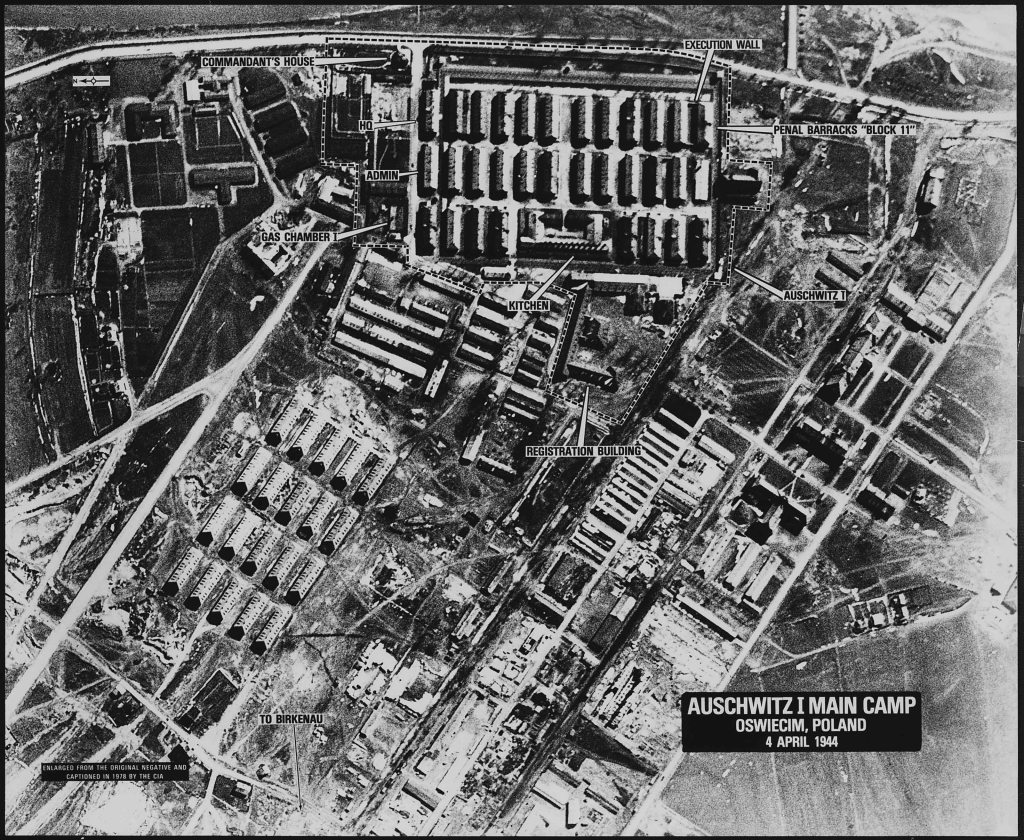
Besides the thorough explanations on the systematization of common war time edifications like fortresses, bunkers and bomb shelters, the book also accounts descriptions of the horrifying design and planning of the extermination camps developed by the Nazis. As the books states, these structures combined for the first time confinement, industrial production and industrialized murder. The original town in Auschwitz was developed by the Germans and was originally planned as an industrial pole until it subsequently added the extermination camps. The whole project, initiated by Breslau architect Hans Stosberg, was meticulously defined in a mixture of restoration, new urban and agricultural expansion areas and the adaptation of the city to become one of the industrial hubs of the region. In January 1942, at the Wannsee conference, the ‘’final solution’’ was ratified and the construction of the gas chambers started.
The book is richly illustrated with archive images from built and unbuilt projects as well as the motivating propaganda design material, so common at the time.
The WWII war effort resulted in a major leap for industrial progress and exponentiation of the production in almost all fields. In its final consequences, it contributed to a change in society towards a consumer driven system, after the conflict was over and peace came. For better or worse, architects played a major role on contributing for this new reality and Architecture in Uniform untangles this fact in all its point of views.
Author: Cohen, Jean-Louis
Published in 2011 by the © Canadian Centre of Architecture (CCA) and © Éditions Hazan, Paris, to accompany the exhibition Architecture in Uniform: Designing and Building for the Second World War, presented at the (CCA) from 12 April to 5 September 2011 and the Nederlands Architectuurinstitut from 10 December to 25 March 2012.
ISBN: 978-2-7541-05309
NUART: 38 7346 0
 arkollective.com
