

It’s a dirty job, but someone’s gotta do it
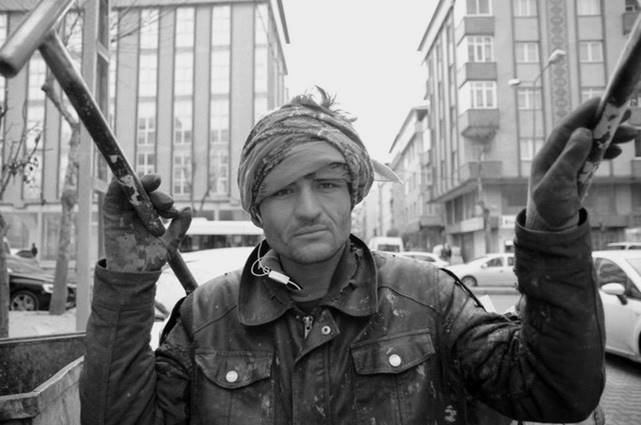
It’s not uncommon to see flocks of stray dogs in the streets of Istanbul. They are normally peaceful and friendly towards most people, unless you pass by running, riding a bike or if you are one of the thousands of toplayıcılar – which means collectors – carrying huge plastic bags held by a metal structure on wheels. The sleepy dog immediately becomes aggressive towards the bended figure, pulling an immense weight, under the relentless sun or the heavy rain.
These ‘’collectors’’ are the unrecognized workers responsible for 80% of material recycling that is done in Turkey. The value of the informal labor performed by the toplayıcılar is hard to evaluate and rarely appreciated by civil society, the authorities or much less by the economists. It is not only the dogs that boast fear and rudeness for them, there is a strong social stigma labeling them as dangerous to the population.
How the system works and doesn’t…
Recyclable materials thrown to the garbage like plastic, metal, aluminum, card board and other are separated from the common litter by the collectors and then transported to triage areas where a more refined selection is performed. After that, the different types of materials are sold for a very low price to unaccredited warehouses who then resell the ”merchandise” to licensed firms or directly to recycling factories. The smallest share of the profit goes for the collectors and the highest to the private companies, in general hired by the government to do the recycling job.
In the last decades, the government has promoted contracts with private recycling companies throughout the country. Nonetheless, they cannot (and don’t want to) compete with the low operating costs of the waste pickers.
It’s calculated that more than 500,000 people work as ilegal garbage collectors in Turkey. This enormous amount of cheap labor force, with far reaching capability, seems very convenient to those companies who are supposed to be responsible for the proper waste management in the country.
As an unrecognized and informal type of labor, waste pickers have no right to a fixed salary, to social security, healthcare, worker’s rights or any kind of state benefits. Living in a limbo and exposed to all kinds of health hazards, the toplayıcılar are marginalized, made untouchable and invisible by the institutions and the Turkish society in general.
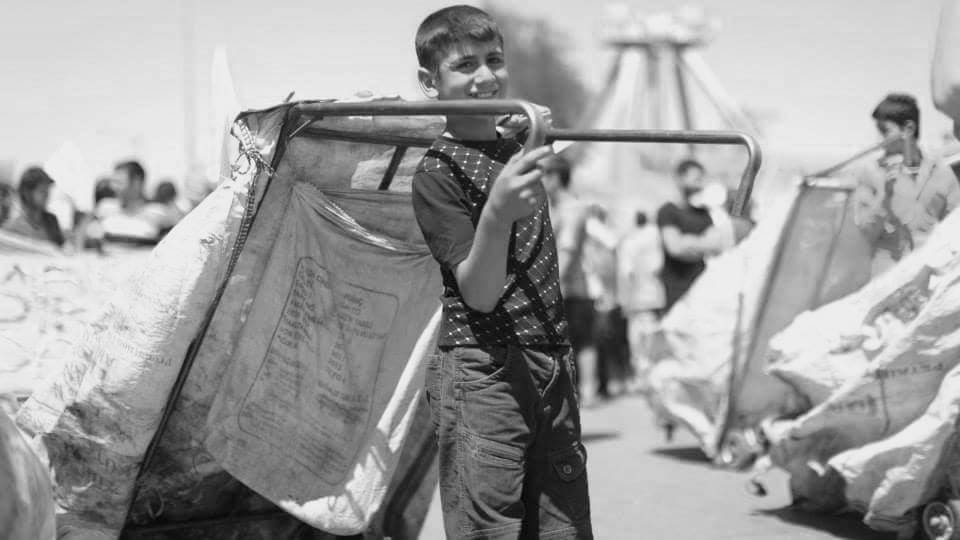
Recycling in Turkey is as much an institutional problem as it is of citizenship. Although one might see recycling bins in the streets of Istanbul, they are mostly for show off. Most people in Turkey do not select their garbage and even if they do the separation at home, the different bags will end up altogether in the same truck.
As one of world’s worst ranked countries in waste management, Turkey seems not to be interested in implementing the regulations that its law makers approved in the past.
Becoming Visible

Similar to countries like Brazil and Colombia, in the last years, the Turkish waste pickers’ community has been trying to organize itself in order to make the collective more visible and to try to put an end to the exploitation undertaken. Until now with limited success.
Associations like the Recycling Workers Association (Geri Dönüşüm İşçileri Derneği) or the Street Waste Collectors Association (Sokak Atıkları Toplayıcılar Derneği) are fighting for the social and legal recognition of the street waste collectors. They believe that it is mandatory that social consciousness must be encouraged and that prejudices towards these urban heroes must be brought down.
The new administration of the Ankara Greater Municipality, now in the hands of the main opposition party, the CHP, has recently brought the subject to the spotlight, trying to find solutions to integrate these professionals within the established systems of the city’s waste management.
A product of cities, a product of war
It’s only expectable that the largest number of people dedicated to this activity aggregate in cities. In this case, the more waste a place produces, the more work it provides. Cities like Istanbul and Ankara, with populations of 16 and 5 million each, are home to the largest number of waste collector communities in Turkey.
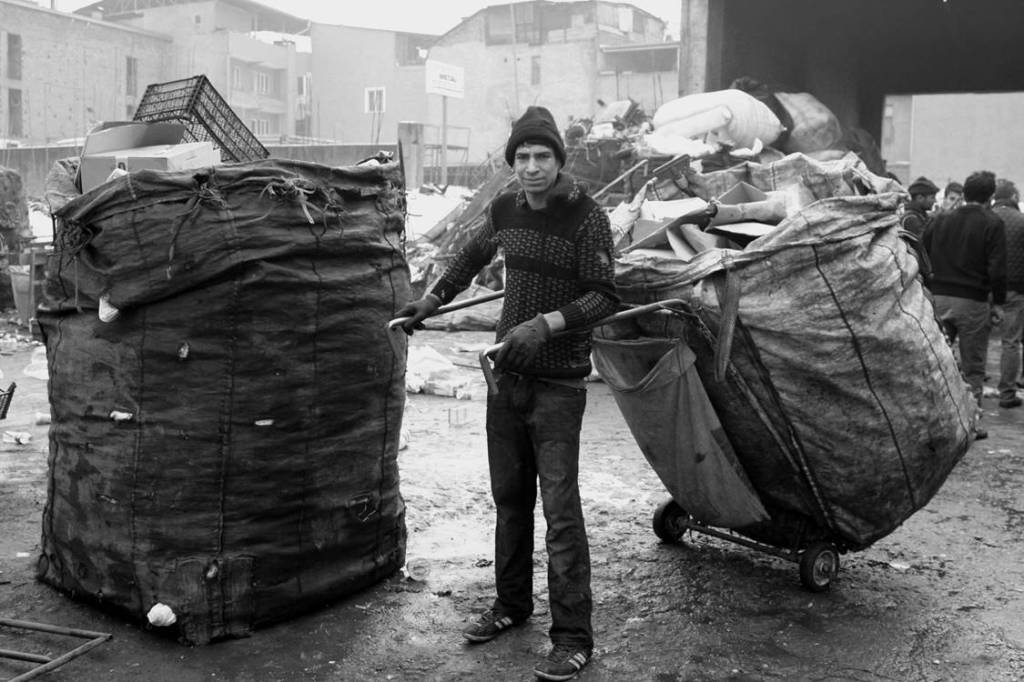
The largest number of toplayıcılar lives in the most poor and marginalized urban neighborhoods. It is documented that until the first decade of the XXI century, they were mostly coming from the Kurdish and Roma minorities. After that, it has been slowly changing and a considerable number of refugees/immigrants of Afghan origin commenced to take an important role in the social component of the work force. Nevertheless, the economic crisis the country has been living in the last three years, adding to increasing unemployment and ever growing inflation, has caused many Turks to fall under the poverty line.
Turkey is now home to more than 4 million refugees coming mostly from Syria and Afghanistan. As a totally illegal activity, waste picking does not require papers or knowledge of language. Everyone can join and everyone can leave.
Under the Spotlight
In the last years the inhuman conditions the Turkish toplayıcılar are living have been subject of discussion and consistently exposed in the media outlets, giving a new breath to their cause.
The streaming platform Netflix recently released the movie ‘’Paper Lives’’, a Turkish fiction drama based on the lives of those who collect paper in the streets of Istanbul. With the historical city as background, the movie highlights how the weakest are those prone to ‘’fall’’ into this type of work, namely the homeless/abandoned children and the immigrants.
Independent of the quality of the movie, it brings to the frontline and to the comfort of the privileged homes, the crude reality of the voiceless toplayıcılar.
Toplayıcılar in Numbers
- Estimated number: 500,000 (100,000 in Istanbul).
- Working hours: 12/15h per day.
- Amount of waste collected in a day by one person: up to 250kg per day.
- Average income: 100 Turkish Liras (9,74EUR) per day.

(Reference article: ‘’Undervalued and unrecognized, Turkish waste pickers at mercy of formal recycling sector’’. By Didem Atakan in Duvar English.
 arkollective.com