
Small Town Blues
Since the second half of the XX century the interior regions of Portugal have been suffering a continuous loss of population in detriment of the coastal areas. Today, more than 60% of the country’s 10.5 million habitants live between Lisbon and Porto.
The provincial cities (Capitais de Distrito) of the interior still play a structuring role in the country’s organization and consolidation of the social fabric by being poles of industry, education, bureaucracy and entertainment. However, for the lower tier of smaller cities that cluster around them, the process of loss of the younger and aging of the older has been draining most of the core activities that create opportunities and make it worth staying.
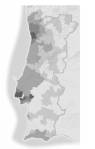
Map showing the density and distribution of the population in Portugal in 2010. Almost 7 million of the 10.5 million habitants of the country live by the sea.
In a less urban and industrialized Portugal, these small cities meant much more for the country and its population than they do today. With a poor and rural economy, short of transportation infrastructure connecting to the main urban centers, those aglomerates offered a glimpse of civilization to those living in the distant provinces. They guaranteed the access to new products, fashion, culture and entertainment. It always came with a delay, but it came.
In this context, the ‘’Cine-Teatros’’ (Cinema + Theater) buildings were an essential equipment, bringing culture and a bit of glamour to these forgotten places. Throughout Portugal, Cine-Teatros played a key role in the propaganda and the cultural program of the dictatorship regime of the Estado Novo (1926-1974). They were, in many cases, fruit of private investment, but always approved and built in the best interest of the ruling party’s politics.
Usually, this equipment would be gathered together with the Post Office, Central Bank representations or the City Hall, generating a small cluster of prestigious central services and functions.
Through the years, the regime developed its own architectonical language – commonly known as Português Suave (literally meaning Soft Portuguese)– which consisted of a formal syncretism of modernist imported influences together with traditional regionalisms of nationalist inspiration. However, the design of buildings related to a more mundane type of culture, like Cinemas, Theaters and Hotels, would sometimes be relieved of the over-local imprint and might showcase imported ‘’showbiz’’ aesthetics, coming from abroad. The ‘’Cine-Teatros’’ had the double virtue of breaking the monotony of the built cityscape as well as of the often boring provincial life.
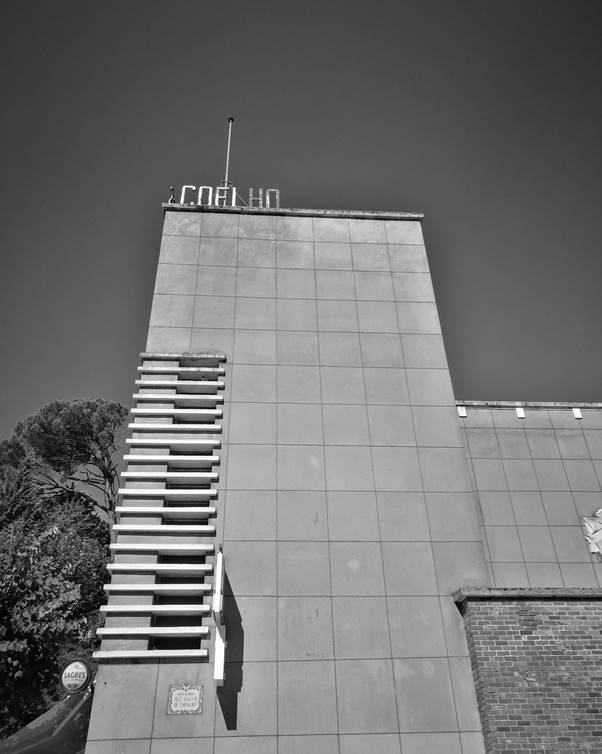
Teatro Alves Coelho – Arganil
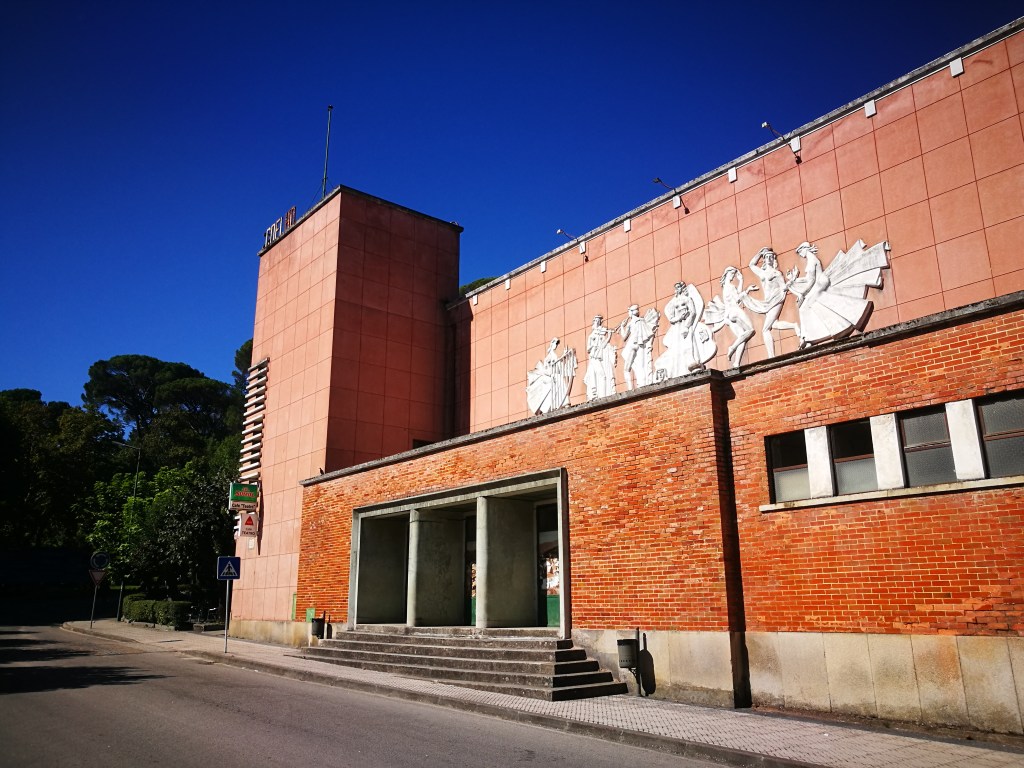
Arganil is one of those small urban centers in the heart of Portugal, at a 60km distance from Coimbra, the most important city between Lisbon and Porto. At its center is the Teatro Alves Coelho, nowadays an abandoned building waiting for a new life.
Opening in 1954, its construction was fruit of the joined effort of local citizens which contributed according to their financial capabilities to the make project real, as well as of construction and furniture companies who offered the materials and other necessary components.
The building clearly stands out from its context given the playfulness of its volumes and strong color. The crimson rendered façades, with its corner tower articulated with the brickwork plinth, that marks the entrance, introduce a graceful dynamism into the traditional city landscape. Its placement, at the top of a small avenue, also reinforces its presence as one of the prestigious buildings of Arganil.
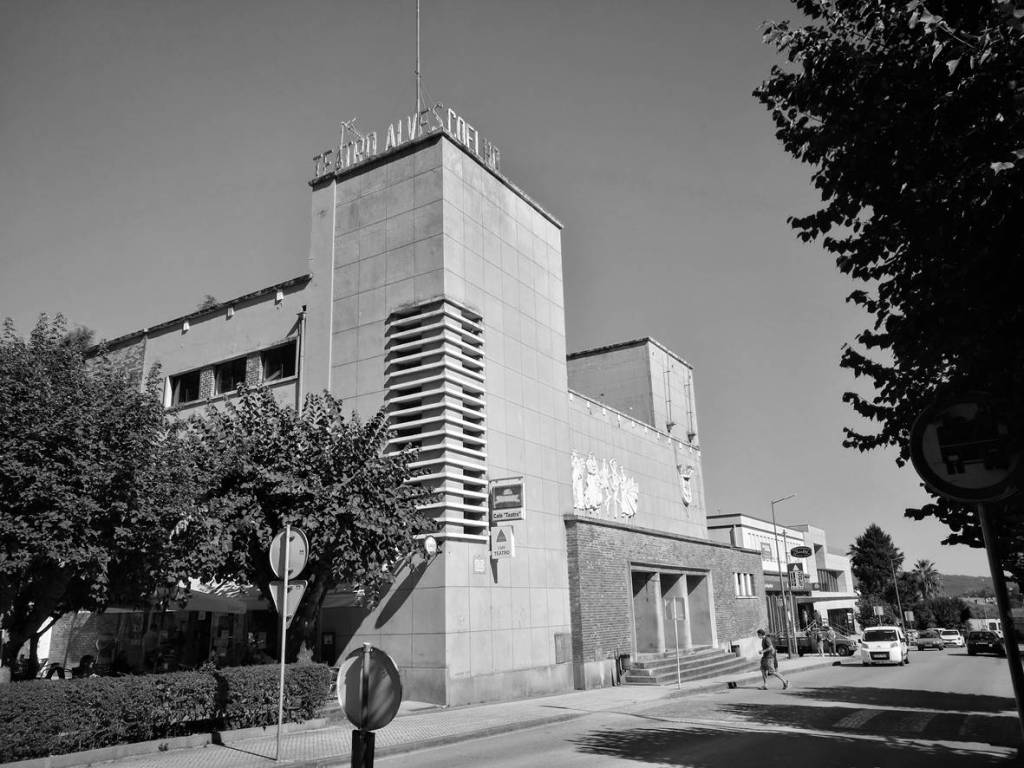
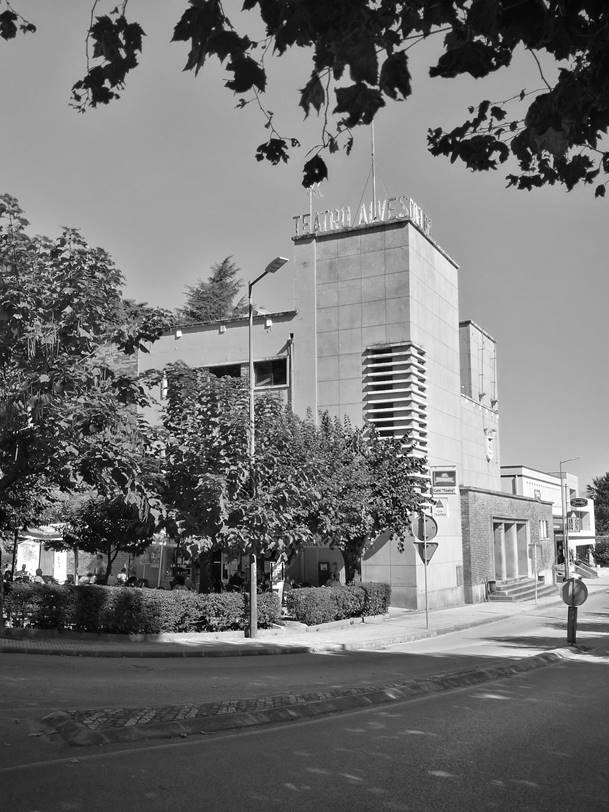
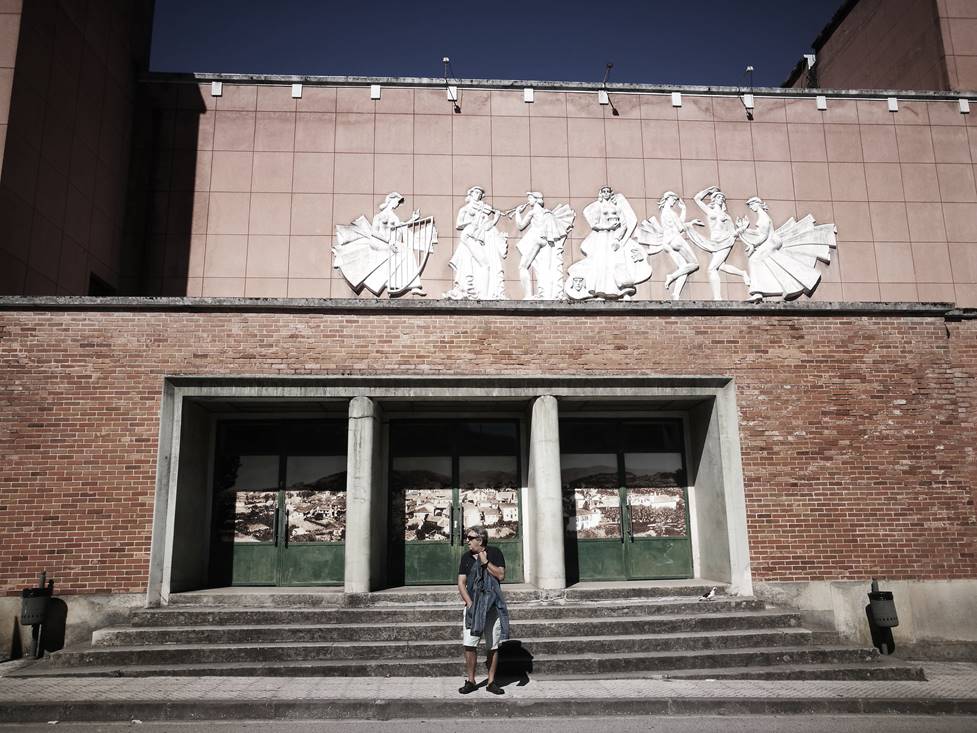
The Alves Coelho Theater was designed by the multi-faceted architect Mário de Oliveira. Through his long life and career he was also acclaimed by his paintings and dedication to the art field. And it is probably for that reason that he brought to this small project the sculptor Aureliano Lima and the painter Guilherme Filipe. This was a common characteristic of such building typology during the dictatorship times. Given its relation with culture, it was usual to integrate other arts into the project. In this case, we can see the representation of several performers in the bas-relief sculpture attached to the main façade, over the entrance doors, introducing movement and expression to the hyper-functionalist composition of the building.
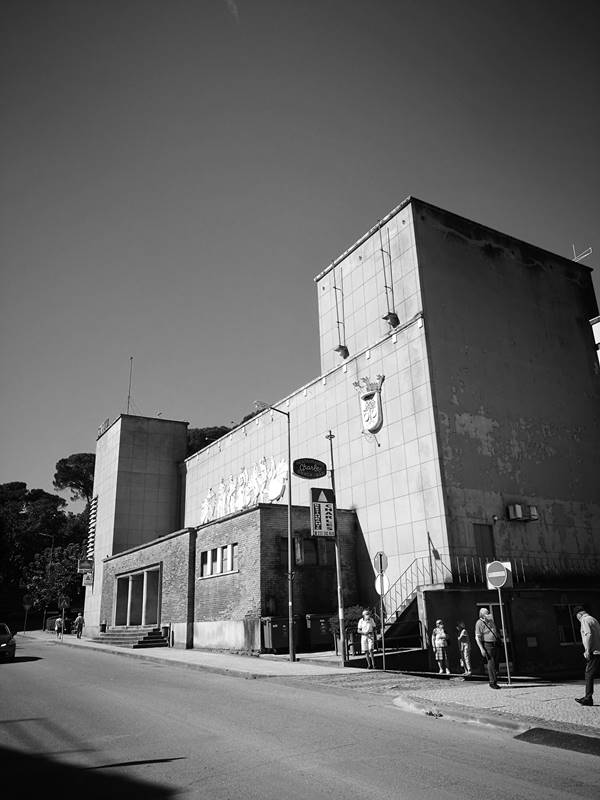
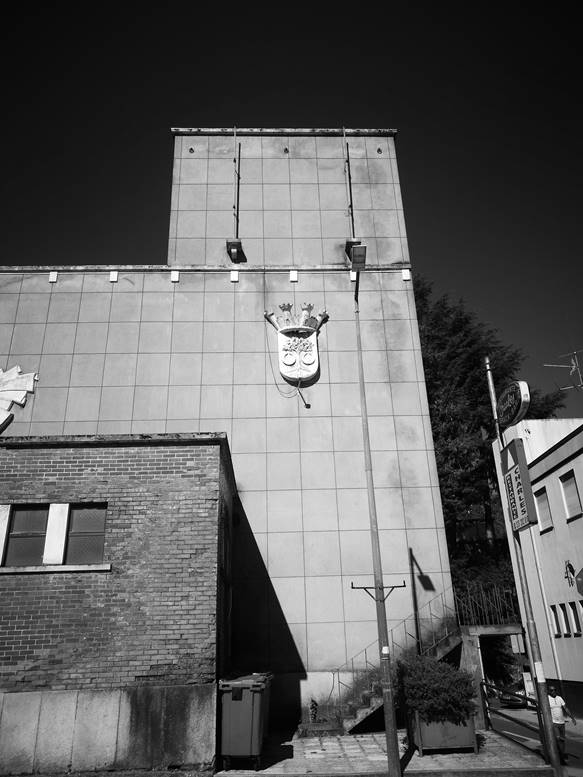
The cultural equipment was a performance venue for Theater, Music Concerts, Dance and Cinema events. It worked until 2002 when it was closed due to its poor condition. Since then, its ownership has been changing from hand to hand looking forward a renewed life. With its destiny still unclosed, the people of the small town of Arganil will have to drive a fair distance to have access to a proper Friday night show…
Cine-Teatro O Campino – Alcácer do Sal
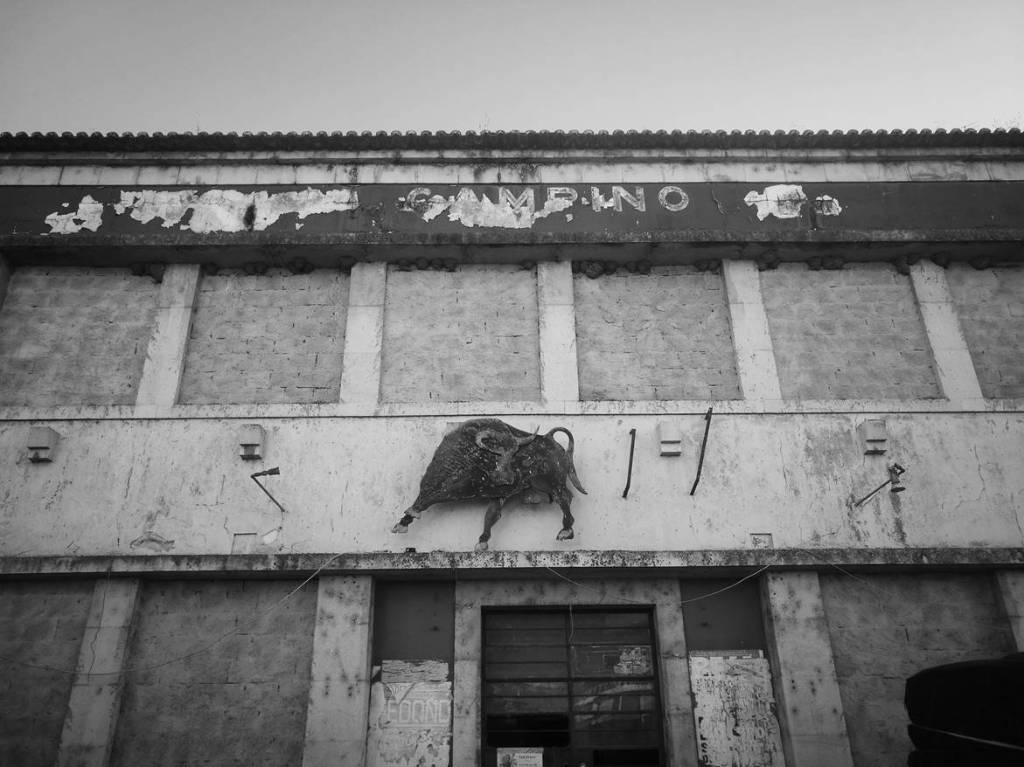
Three hundred kilometers south lies the region of Alentejo, a totally different landscape, climate and popular culture. Similar to the Alves Coelho is the condition of the Cine-Teatro O Campino, located in the heart of the small city of Alcácer do Sal. Built in 1950, once it was open, it became one of the social centers for the local community. Beyond the Cinema-Theater functions, it also included a bar with a terrace and a restaurant which only reinforced the role of the venue as a trigger for social life.
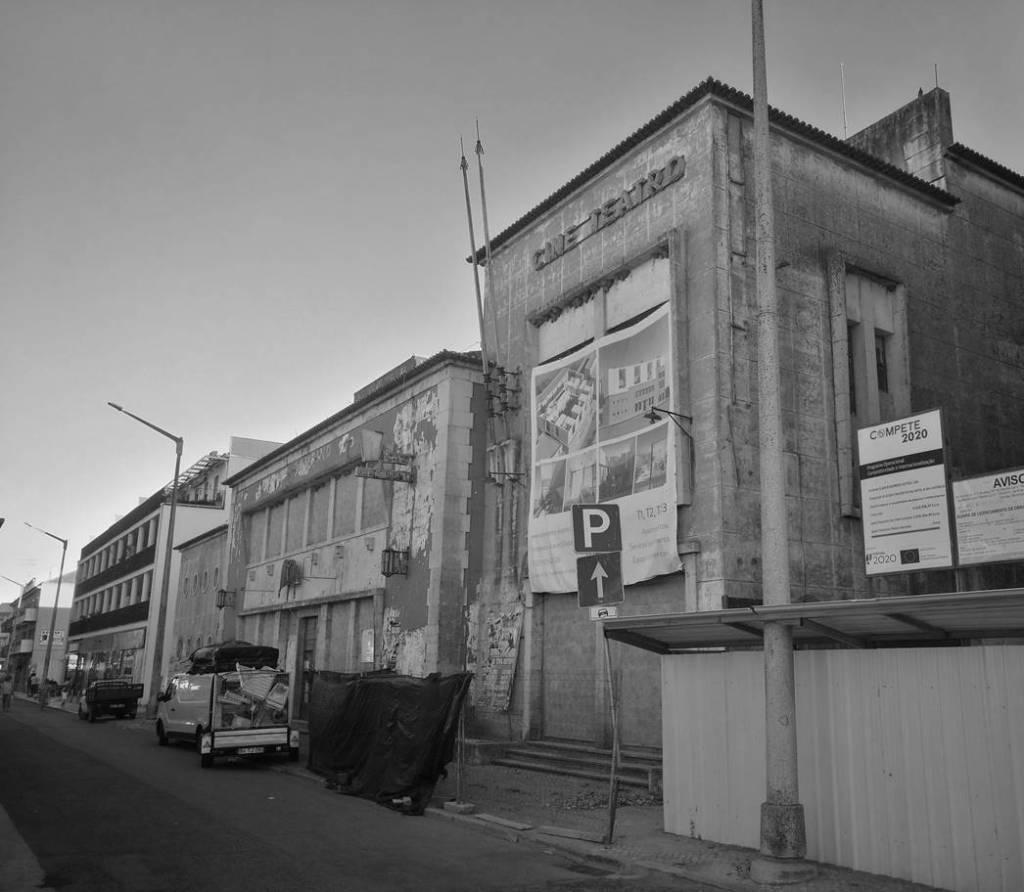
The architect responsible for the project was Amílcar Pinto, an experienced designer in this specific functional program. He had already worked in five other Cine-Teatro projects around the country such as the ones in Santarém (the beautiful Cine-Teatro Rosa Damasceno), Almeirim and Gouveia when he was asked to design O Campino. Coming from a background of the Portuguese late version of the Arts and Crafts movement, under the influence of Raul Lino, Pinto starts to embrace a certain level of modernity once he works in such projects.
As in the case of Arganil, O Campino is the testimony of a kind of conceptual liberation for the architects working in the first six decades of the XX century. The Cultural equipment’s such as the Cine-Teatros enabled the designers to go beyond the ‘’official’’ aesthetics of the ruling regime and experiment with more freedom and try to project a certain idea of modernity. It was in some of these buildings that the tension between Traditionalism (on which the regime was keen) and the Vanguards would be better readable in Portuguese architecture at the time.
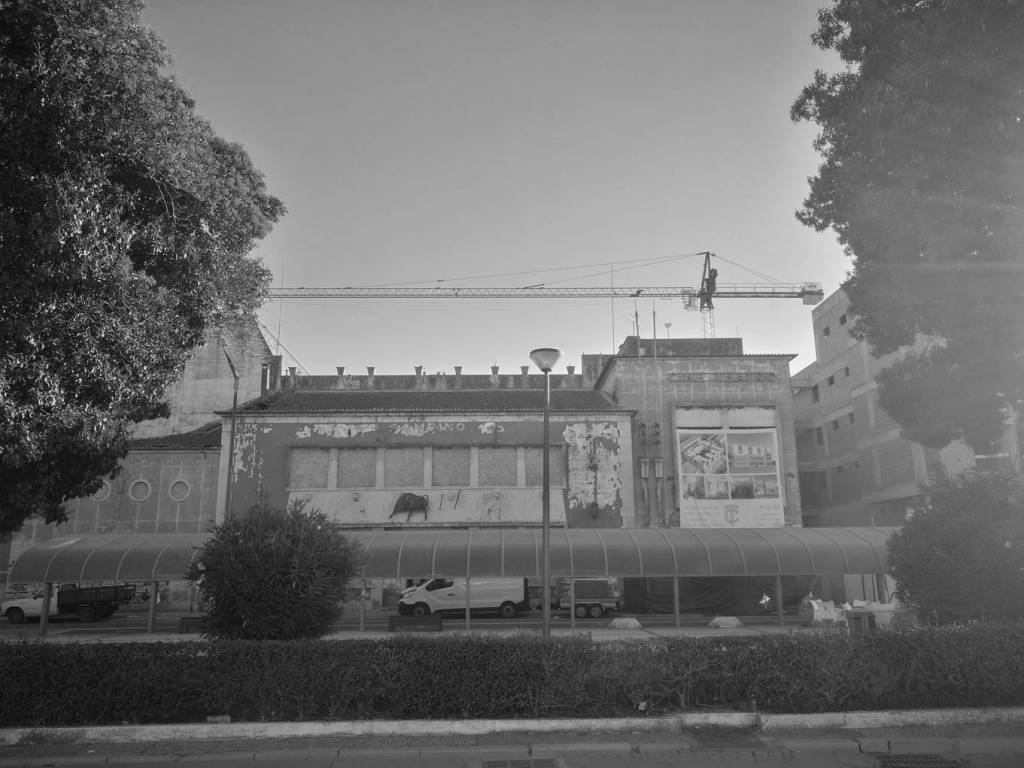
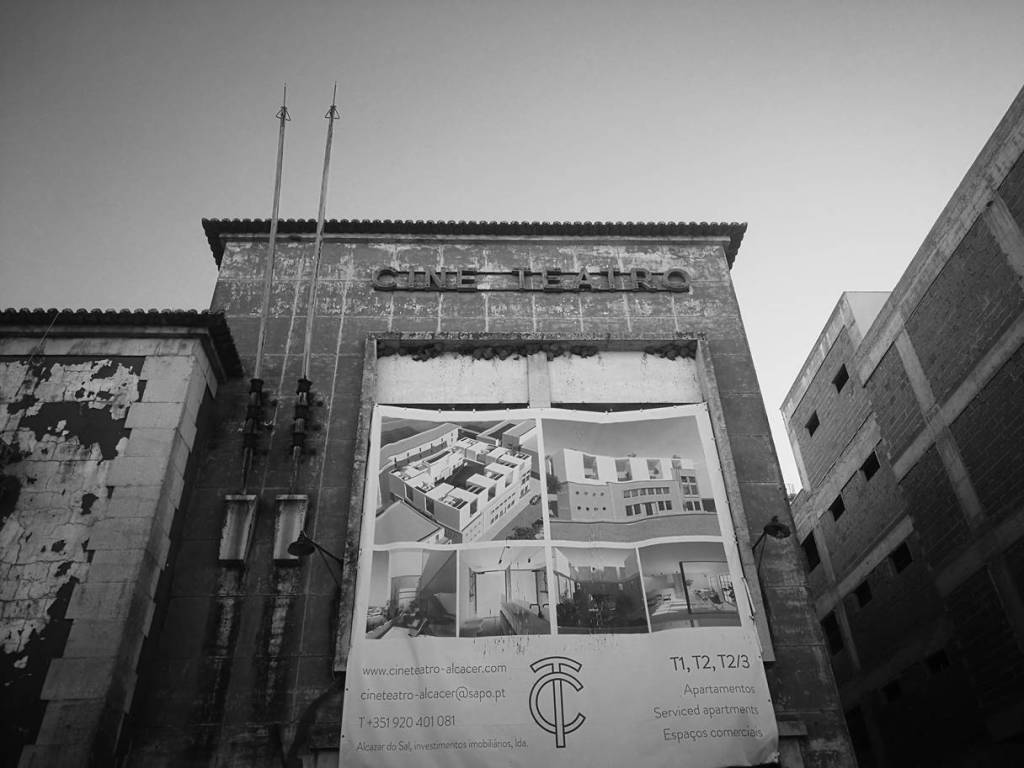
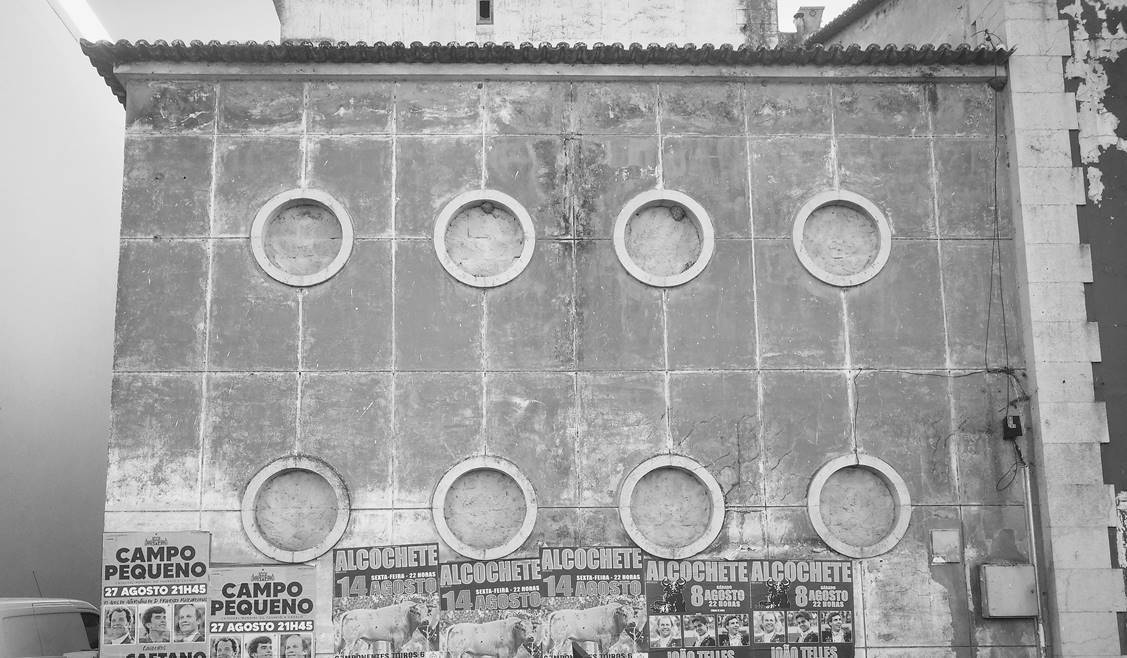
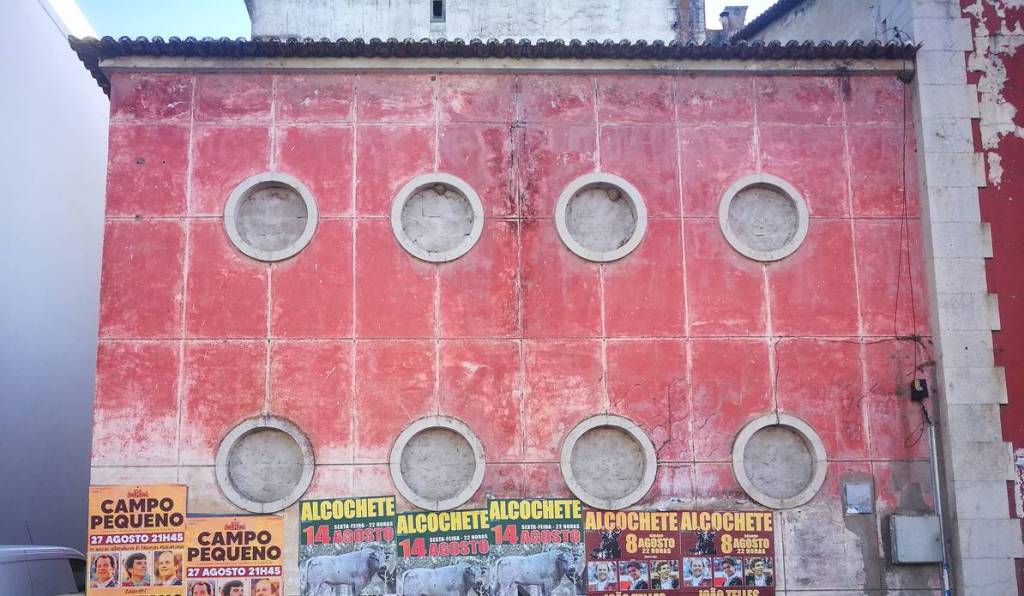
O Campino – the name refers to the Portuguese cattle herders existing in the regions of Ribatejo and North Alentejo, a very patriotic symbol – combines clear volumetric playfulness with traditional roof tiles, as well as a composition of round modernist windows which reveal a transitory state in the conception of the whole and the details.
The building is now being integrated in a Residential refurbishment project and will lose its original function. The building will be engulfed by a massive ‘’portuguese minimalism’’ construction which will make its presence become anecdotic to say the least.
What Now?
It’s quite clear that these two buildings – and many other throughout the country – will never recover its glamorous past. Their function became obsolete and seem to be unviable both social and economically and the Covid 19 crisis we have been living through will only reinforce this problem. It is time to rethink these buildings in a contemporary perspective having in mind the importance of its legacy and ensuring their protection as the mark of a singular era in the history of Portuguese architecture of the XX century.
These structures can be adapted, without seeing its design integrity destroyed. They should be thought as assets to host new functions in the fields of education, culture or entertainment and adapted to the needs of the populations and its new dynamics. This might as well help contribute to the fixation of the youngest and put the small cities back on the map.
 arkollective.com