
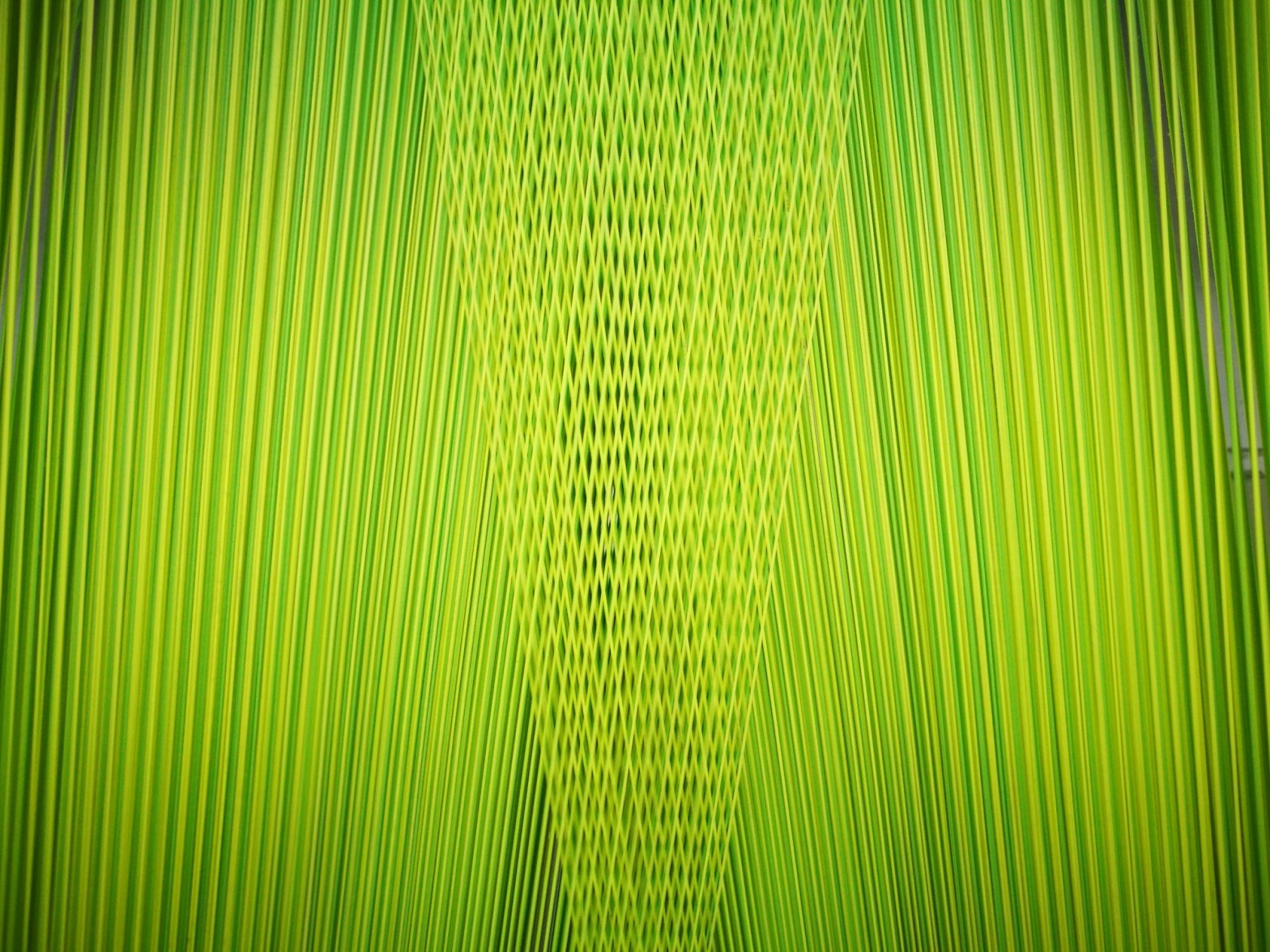
A Pragmatic Space
The Industrial Revolution meant a drastic turn in the production and transformation of iron and steel. In architetural terms, it also represented an enormous evolution in the spatial characteristics of buildings, more specifically, in factories. This technologic breakthrough enabled the production of larger, stronger structural elements, like beams and columns, to build much wider, longer and higher spaces for production, transportation, storage, etc.
Since then, generically, factories mean large covered spaces that host machinery for production and the workers that handle them.
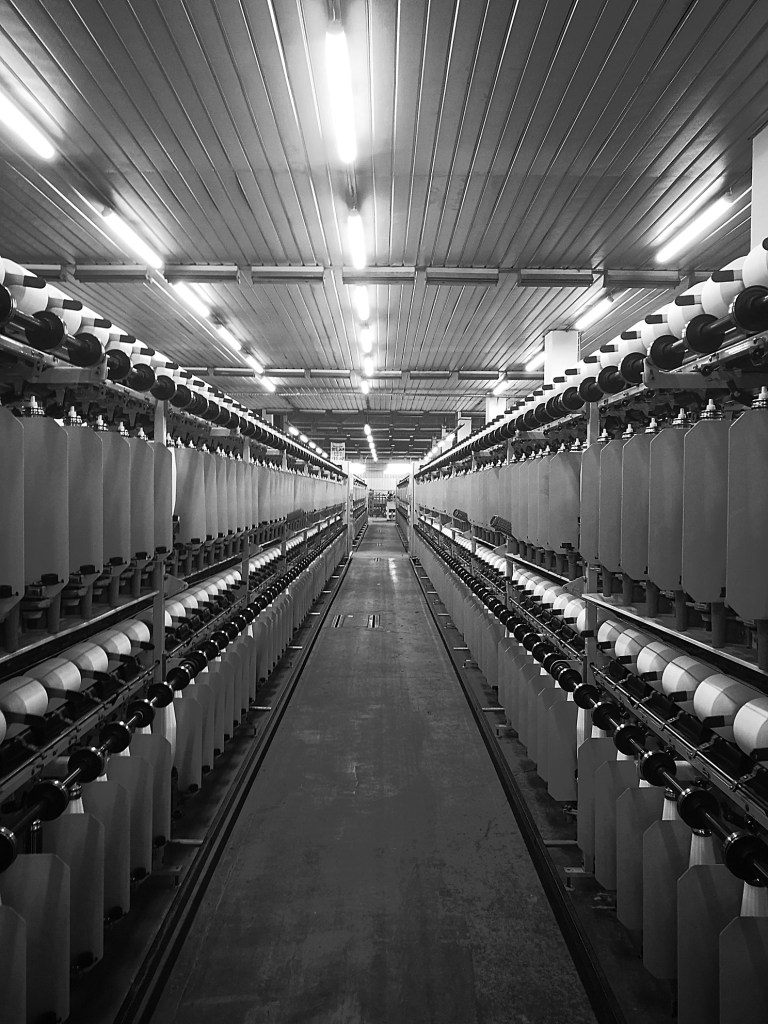
In most cases, they embody the pragmatism of the industry itself: full and maximum capacity for production. A machine-like-building bearing machines within.
A machine-like-building bearing machines within.
If in the past, factories would be filled with workers nowadays machines are the main protagonist. Its easy to see several thousands of square meters without a soul, the space filled only by engines and the strepidous sounds they produce.

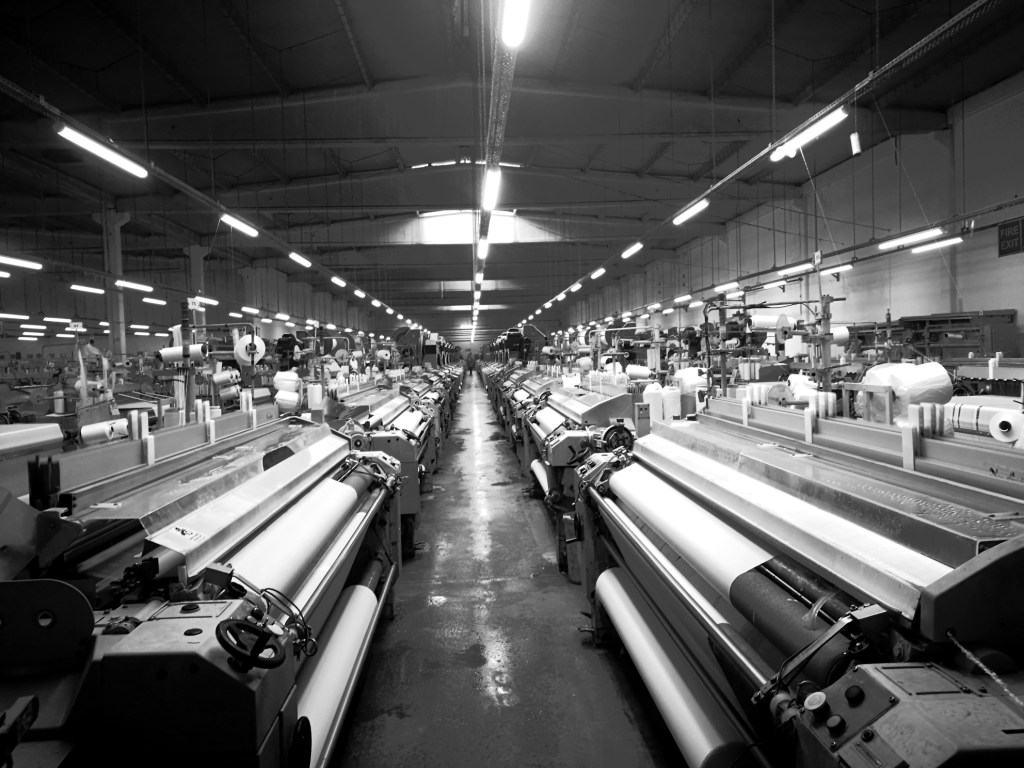
The equivalent of the beautiful brickwork factories of the XIX century are now built in precast concrete and sandwich panels, concrete blocks or thin metal sheet with thermal insulation. Materials designed only to create the necessary protective and enclosing qualities for a certain function to be performed.
Its roofs, rarely providing natural light for the workers inside, are full of fluorescent lamps casting an ice-cold atmosphere over the full space. The antithesis of a natural and empathic environment.


“We shall sing the great masses shaken with work, pleasure, or rebellion: we shall sing the multicolored and polyphonic tidal waves of revolution in the modern metropolis; shall sing the vibrating nocturnal fervor of factories and shipyards burning under violent electrical moons; bloated railroad stations that devour smoking serpents; factories hanging from the sky by the twisting threads of spiraling smoke; bridges like gigantic gymnasts who span rivers, flashing at the sun with the gleam of a knife; adventurous steamships that scent the horizon, locomotives with their swollen chest, pawing the tracks like massive steel horses bridled with pipes, and the oscillating flight of airplanes, whose propeller flaps at the wind like a flag and seems to applaud like a delirious crowd.“
Filippo Tommaso Marinetti, writer, poet and author of the Futurist Manifesto.
Long gone are the epic epiphanies of the futuristic poets and artists. The echoes of a romanticized vision of such vertiginous future do not reverberate within these walls.

In the portraid textile factory, which could be anywhere, in China, Bangladesh or Vietnam, the “form follows function” motto of modernism is taken to its maximum level. Without any design ambitions beyond practical reasons.
Nevertheless, a sense of beauty is still to be grasped from the imensity of its corridors, the exaggeration of repetition or the simplicty of its symmetry. Adding to this, the cacophonic sound of the machinery. At the end, one is overwhelmed by the basic principles that guide the genesis of the factory itself and how it all ends up in the most simplistic visual and acoustic orchestration.
In the frame of the camera, filtered in black and white, a miriad of details become like little monuments to industrialization.
“Haiku” for the future factories:
Matrix of algorithms.
A.I. rules.
Mirrors of an unfinished self.
Giving away what they never had.

All photos by João Cruz Neves
 arkollective.com