

From small details to broader perspectives, drawing the city can easily become an addiction for architects. Understanding how men’s ultimate habitat developed and took over the natural territory is something almost irresistible. How the oldest cities seem to grow organically, in permanent adaptation to physical conditions and with an exponential empirical method of expansion. Or the opposite way, of how some other are built today, sometimes imposing themselves to the context where they grow, hastily looking forward to redefine and regenerate it.

Reading the logic of its fabric, how it relates and determines the genius loci is something fascinating and, I truly believe, that from eternal Rome to superficial Dubai, all places have something worth experiencing, observing and understanding.
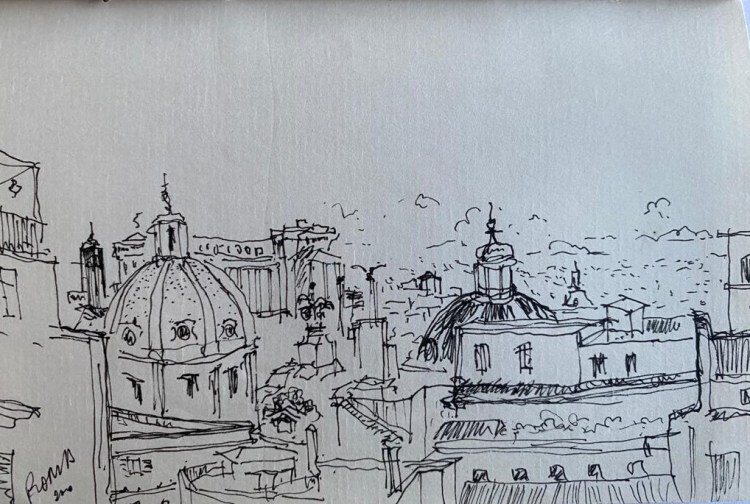
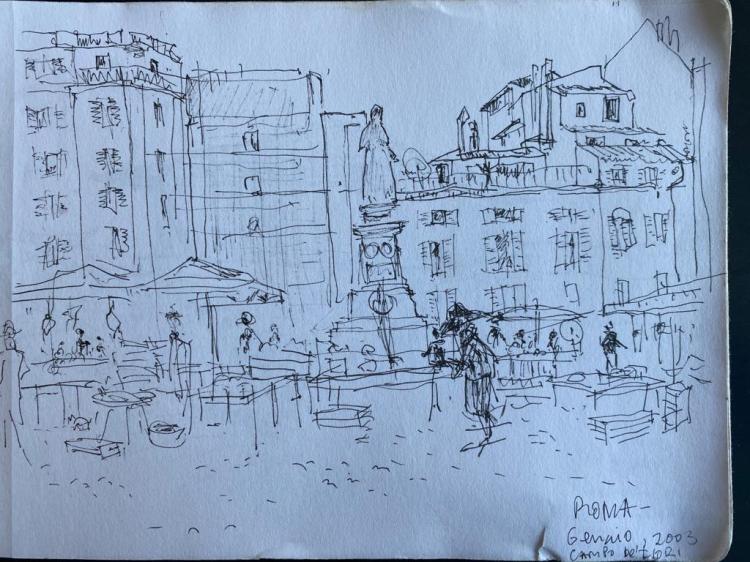
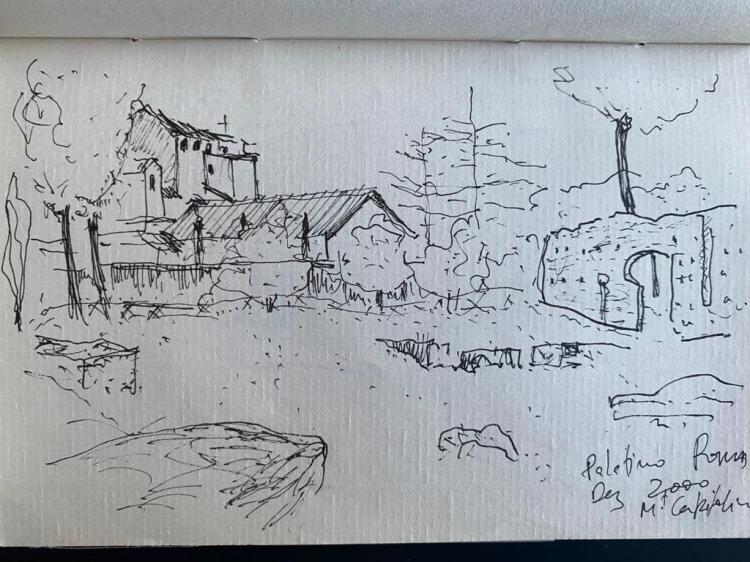
Slideshow above: ROME, 2000/2003. Black Pilot Pen and Black Ballpoint. Eternal and idiosyncratic.
This brings us to the idea of identity and authenticity. These concepts can be forged through thousands of years of history or, as we can see in the Middle or Far East, in just a few decades. With very different levels of maturity and savoir faire.
The urban population represents now almost 55% of the Earths whole 7 billion plus people. In 2050 this number will rise up to an incredible 70%. This means that cities will become the human beings most common habitat. Its roads, squares, parks and buildings will turn into the background for the life of a great part of the human race.

Protecting the existing built patrimony by preserving the historical areas and improving the ”average” rest, and also making sure its population has access to good life conditions and democratic institutions is a crucial challenge for humanity in the coming years. Through proper designing and building, as well as good urban politics, we could hope that our cities can grow and be preserved without losing their idiosyncratic values.


Ensuring that cities remain diverse and flexible is one of the key points to make sure that all walks of life have a place to bloom and thrive. Cities must remain the locus where positive differences coexist and, through that dialectics, generate creativity and opportunity.
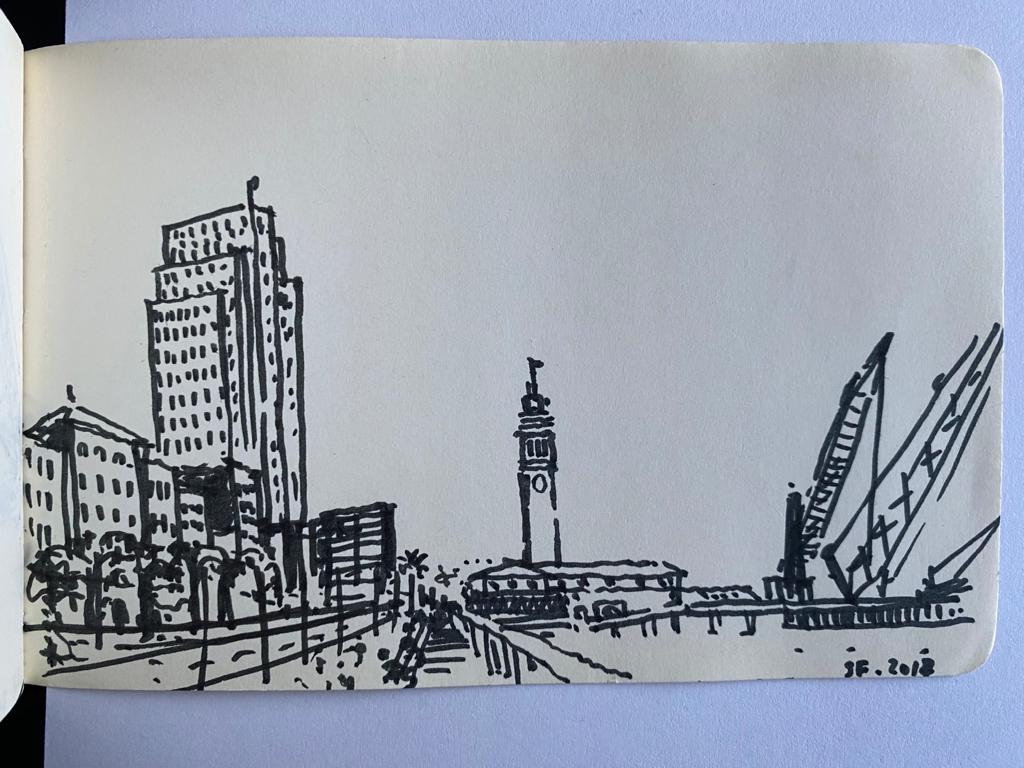


Slideshow above: SAN FRANCISCO, 2017. Black Felt Pen. One of USA’s wealthiest, most sophisticated and creative cities thanks to its open democratic values.
More than ever, buildings became to man what a shell is to a crab. A protective armor for the physical and mental self. Inside them we live, we work, we study, we learn, we party, we fall in love, we breakup, we die… From their interior spills the energy that fills and contaminates our cities.

That is why building with quality can help support democracy and progress in society. What you invest in them, new or old, will be given back to the city and to its citizens, resulting in the craft of a perception of being part of something. Something bigger than the simple sum of individuals. It should be understood that the quality of what is built can improve social cohesion, suppress inequality and deter discrimination.
This wasn’t always what made cities the amazing complex places they are. We might concede that some of the most astonishing urbanism and buildings were made under undemocratic power. It is all part of the contradictions the city embodies but, in the XXI century, ensuring more democratic and functional cities is the minimum we should demand.
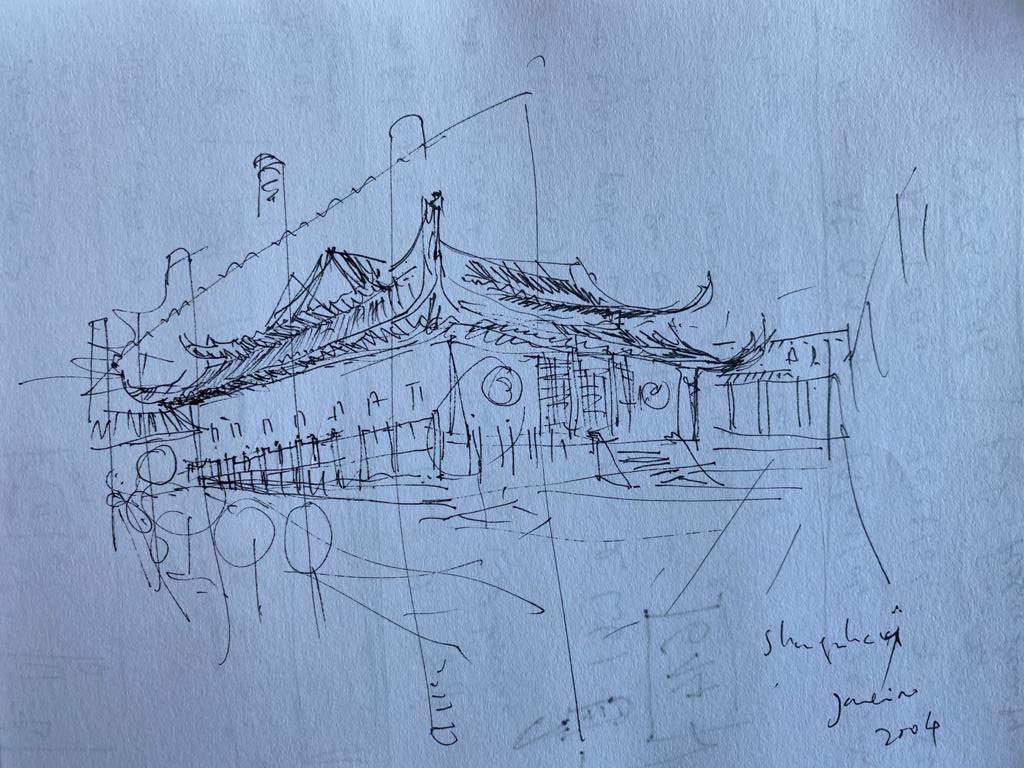

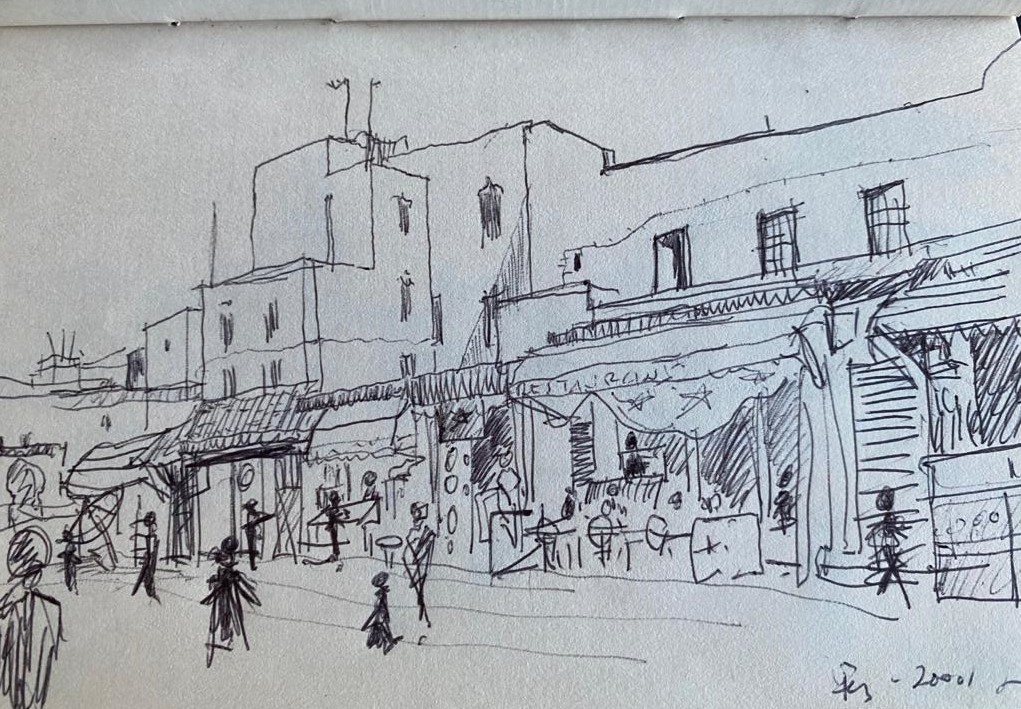
SHANGHAI, China, 2004.
Not only sketching will guide you through the city or between them. When in China, one might need help from someone to help you take the train to Beijing.
Albeit the ”american dream” it sometimes mischievously conveys, cities became the most desired place for humans to live. It still represents a beacon of civilization, a blinding sight for the urban lover or the opportunity seeker.
Travelling became almost impossible these days and time seems to expand due to a certain slowdown in the world’s pace. All good reasons to look at the city around us with more attention and a critical eye. To see what can be improved and use the (institutional) mechanisms that can help you make the change.
Or you can also take out the sketch book, your pens and brushes, and breathe in the views, the smells and build up your memories of the future.
For more posts on Hand and Urban Sketching see: The Sektch Virus, Oh Istanbul, El Cuaderno de Viajes (I), El Cuaderno de Viajes (II) and Travelling Sketches (I) – Intimate Mappings.
 arkollective.com
2 thoughts on “Travelling Sketches (II) – A Praise to Cities”