
SHOPPING AS AN EVENT
As already addressed in our previous articles, the act of shopping, is drifting to a more complex experience then in the previous years. Surprise effect and spontaneity seem to have become crucial to the success of retail. Something part of the new Pop-Up culture, we could say. It makes sense to us that commercial spaces should consider to adapt to this new reality made of temporary happenings.
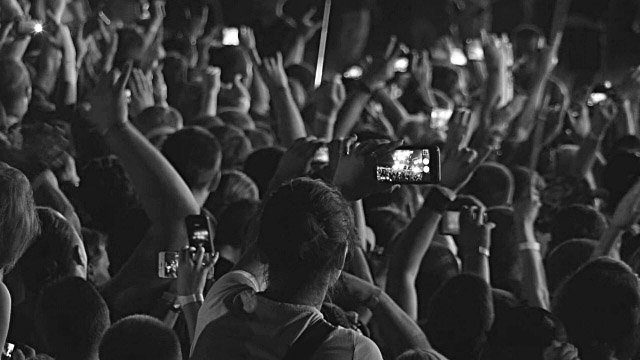
This would imply that in terms of design, retailers would have to consider bigger amounts of spaces – interior and exterior, leasable or not – to accommodate a larger variety of events such as music concerts, exhibitions, cinema or fashion but also conferences, workshops and seminars, for example. These spaces would require great flexibility and adaptability and must have the capacity to work as the background for multiple functions which, as mentioned before, must go beyond entertainment. Engaging activities that focus on arts, fashion, learning or community purposes are possible concepts to be explored.
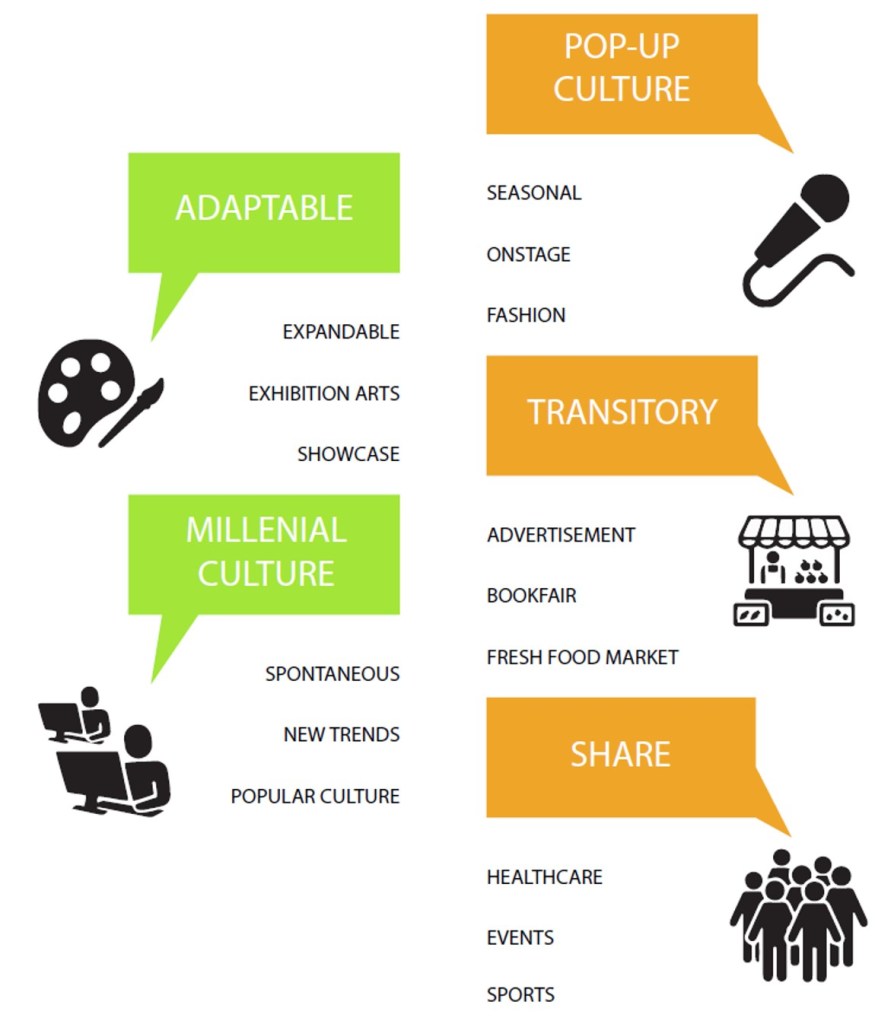
By planning a calendar of activities and events which is aware of the last trends, we can conceive the retail space as living organism towards the public, in the likes of a XXI century Agora.
Events may be centered in food, popular culture, music, fashion, healthcare, seminars or many others.

LESS STORAGE, BIGGER SHOP
The use of land and property for big retail projects requires a considerably large amount of square meters. Independent of GLA itself, the allocation of parking places for customers and workers, the setting out of accessibilities for cars and trucks – together with its service docks for goods supply – and the need for storage areas for each shop, are one of the main reasons for the large demand of space in retail projects.
Given the tendency of retail spaces to return to more dense and consolidated urban areas, we come to think of ways of optimization of the investment by putting in perspective some of the means available thanks to the smart technologies. Land prices in those areas also tend to be more expensive then the periphery ones. With In Store and Online shopping competing and redefining its interactions, it is clear that physical space must make a difference in terms of experience and profitability.
We came to think that, in some cases, the storage areas can become residual in terms of size for the benefit of leasable areas. Shops would now become mostly the showcase or display area of a brands “soul and philosophy”. Primarily they become stages for a buyer’s experience.

If the brand online apps are directly connected to the logistic platforms (usually outside the city center) that store their products then the delivery of the purchased items can be done directly to customers, wherever they decide to – at the shop, at home, work or a restaurant. Waiting times would have to be minimized by means of a very efficient transportation system and a proper distribution network. The service areas and circulation – docks, corridors and lifts – can also be reduced thanks to this same idea and again leave a bigger margin for the owner to invest in the design of the shop and public areas.
Shops would now become mostly the showcase or display area of a brands “soul and philosophy”.
In an urban perspective, this principle could also have a good impact on core city areas by reducing the heavy traffic pressure and thus minimizing the number of trucks arriving to the retail scheme.
 arkollective.com