

Introduction
Some time ago I was asked to make a conference about low rise developments for the Millennial Generation (people born between 1990 and 2000). It was a peculiar exercise mostly because these people are just now consistently starting to earn money and make their first investments. In general terms, low rise developments – villas or row houses – tend to be expensive and there is no consistent data to trace a typological tendency for the taste and appetite of this age group.
I realized a deeper investigation was necessary to understand what are the motivating trends of this age group who just now became mature and totally autonomous.
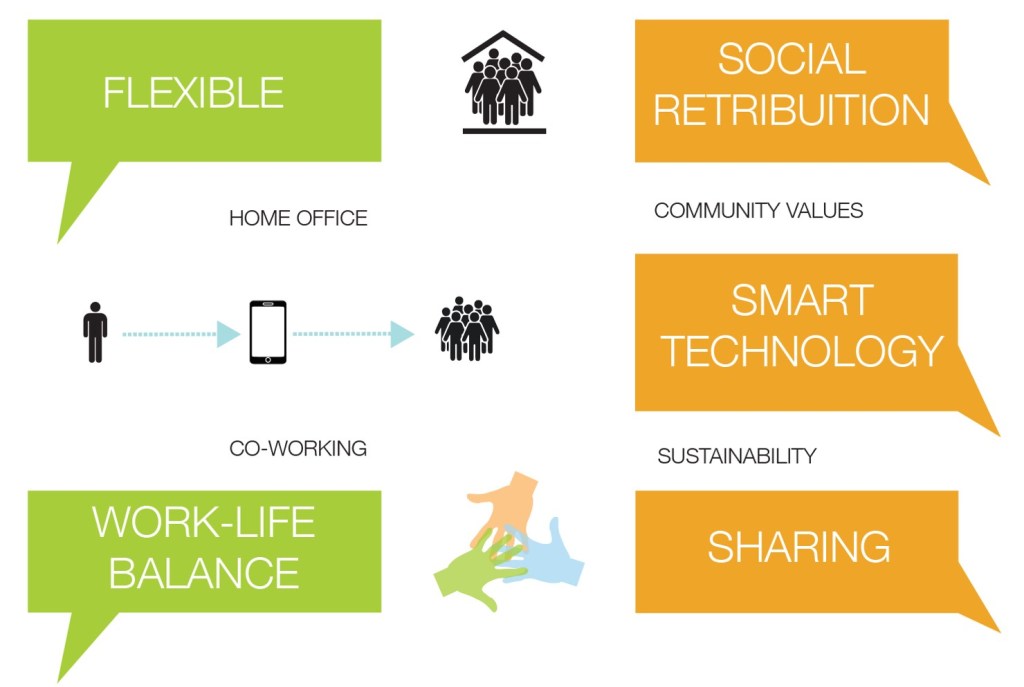
A New Sense of Community
Looking back a few decades to previous generations, we could find substantially different drives to determine the choices that lead towards a certain life style. Post WWII society struggled and fought to achieve stability after the destruction of world economies caused by such staggering event. Coming from such difficult times, where poverty was a reality worldwide, it was only normal that families would, in general, challenge themselves to find better life conditions. Years later, once this goal was achieved, within the frame of capitalism and welfare state, the main trends lead to a consumerist mass system that fomented individualism over a sense of community.

On the other hand, the following generations, benefited from consistent peace times and even faster technological progress. Their access to education, knowledge and information came to happen in a quite different background. Globalization, Networking and Social Media has enabled them to have a more complete perspective on how to influence the world around them and society in general.
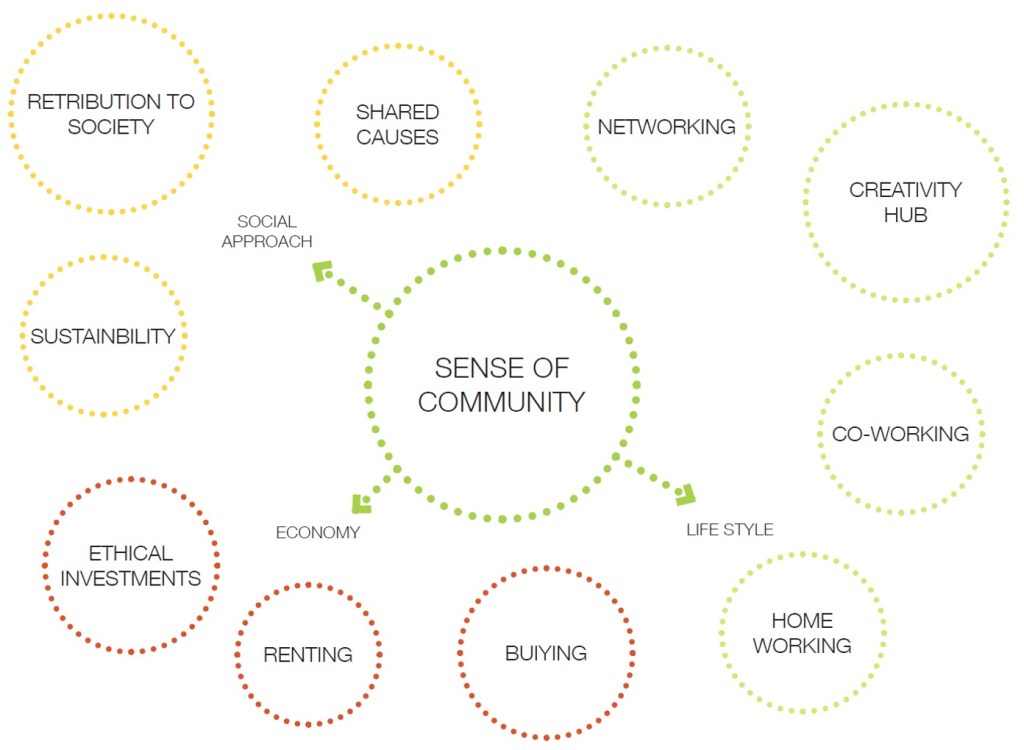

In the micro scale, Millennials are now very much prone to be closer to each other and gather resources in a multi-disciplinary fashion. This means that bridges are easily built between sectors of society and economy, leading to new types of social interaction and businesses. Diversity became part of the DNA of this generation, defying more and more social, gender, racial and economic status quo.
Climate Change, Sharing Economy, Crowdfunding, are examples of collective causes that the Millennials have embraced in recent years. Part of this age group are especially concerned with the impact of their actions and choices on the environment and society. The idea of buying a car or a home seem to many of them a waste of money with a very bad impact on global health.
As we studied a bit deeper, we could read an increasing tendency in Environmental, Social and Governance (ESG) investments by people between 30 and 40 years old, revealing a clear concern towards which kind of funds and industries their money is being applied, making sure they support or don’t have a negative impact on social and environmental sustainability.
Building Communities Through Experience

Photo by Leah Kelley on Pexels.com
If office work culture is suffering such drastric changes in recent years – and even more with the Coronavirus pandemic – what about housing? Is there a new trend for Millennials residential life style?
In the last decade, there has been an increase in the number of Coliving communities. In such typology of accommodation, you are offered serviced apartments with common areas for co-working, communal lounges, kitchens and sports areas with prices tending to be 20% less than renting an apartment for yourself. In big cities traditional renting is expensive and brings bureaucracy and hassle with it. The coliving spaces make it more achievable to live in them and avoid many practical inconveniences.
Sociologically speaking, Millennials are revealing themselves more as experience seekers rather than becoming owners, so this is a perfect match for them. There is also a point of view that praises coliving because it avoids solitude and enables Millennials to engage socially within a safe environment. One might say that Millennials like experiencing life, without taking too many risks…
Millennials are revealing themselves more as experience seekers rather than becoming owners (…)
Utopian Conformism?
What about Low-Rise communities, is it possible that Millennials might also be attracted to such dwelling typology?
In the 60’s and 70’s, utopian communities were established here and there around the world. They mainly came out of the anarchist and hippie movements at the time, opposing traditional life styles and embracing a progressive counter-culture approach. Young people, disappointed with corrupt governments, rampant consumerism, ecological concerns, and the alienation of modern life, were attracted by the pursuit of a dream of building their own better world apart.
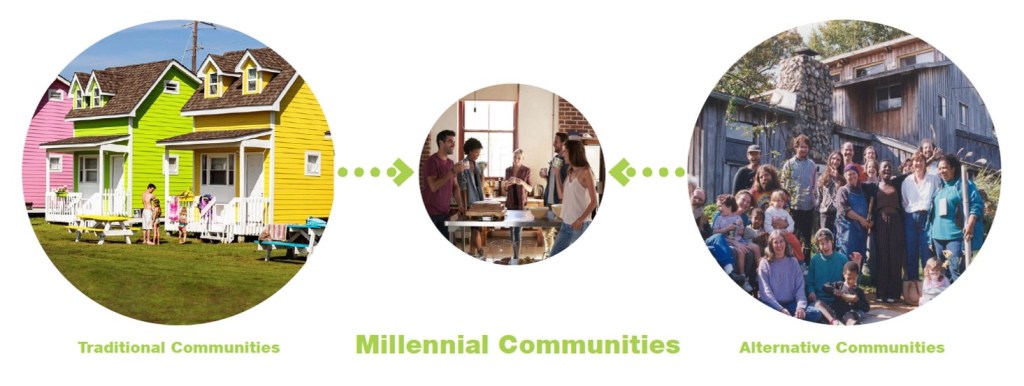
We believe that within a different frame, similar communities will thrive in the coming years. Associating the comfort of modern life with the country side life style. The possibility of permanent access to channels of information via the internet, enables everyone to be connected and take part in a wide range of business activities which doesn’t necessarily engage with the place where people live. We should add to this the advantage of being close to nature and the fact that the in-habitants are able to manage a community towards common goals, which aim towards a more balanced work-life dynamics.
In fact, these self-organized communities will try to fight back global warming, lack of waste management or fossil fuel consumption by promoting eco-housing and permaculture within the same tradition of social transformation that tried to reshape culture in the 60’s and 70’s.
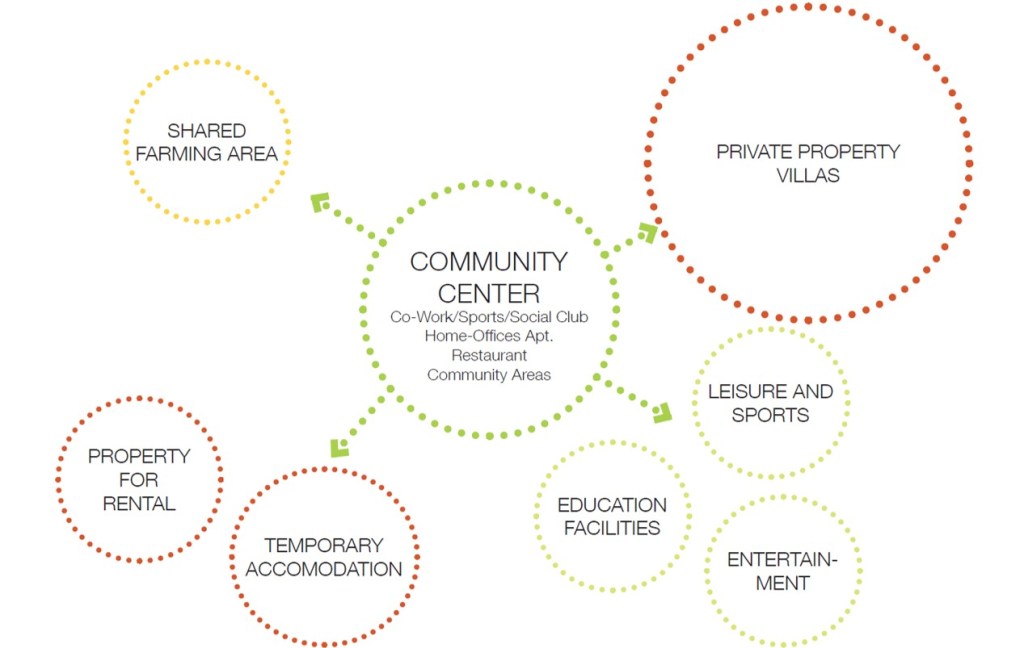
But, as everything nowadays, there will be a business model behind it. One that makes the enterprise economically sustainable and profitable. Such projects will be promoted by private investors embracing the main principles behind it, but never taking their eyes from their wallets.
 arkollective.com