
As the name says, public space is where the members of society move freely and can express themselves in civilized liberty. It’s a common patrimony that all of us, as citizens, use and take care of.
MARKS ON THE GROUND
During this new pandemic people have been globally required and, in some cases, imposed limitations on their movements and displacements on a scale only comparable to what happens during war times or major natural disasters. Different from those cases, the coronavirus didn’t bring any physical destruction to the built environment. Nevertheless, given its extreme contagiousness, certain rules have been defined to avoid the spread of the virus. In many places these rules started to have a physical presence, giving visible expression to the invisible menace that has embraced us.

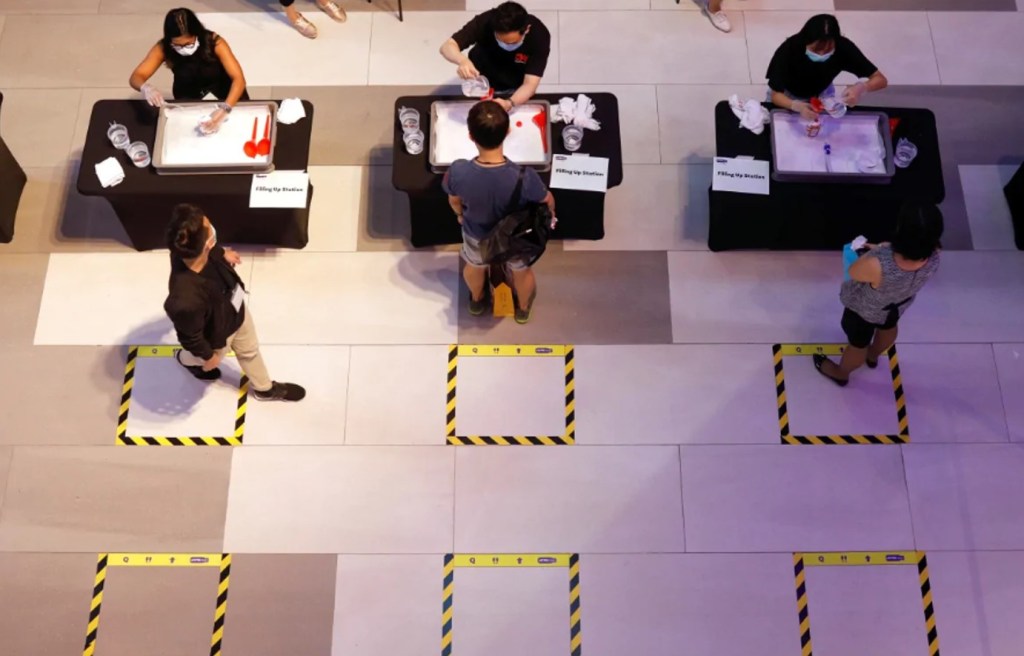
Adding up to the regular urban pictograms and guidance signage we all know from the urban sprawls, city parks, public transportation networks or from the inside of buildings, a specific new code of marks and indicators has appeared to keep citizens aware of safe distancing.
In places like supermarkets, banks or urban squares, lines made out of tape or paint define paths, places where to sit or where to stand waiting, trying to keep people safe.
These new guidelines will (hopefully) be temporary but they are setting new limits, to how people behave and move around our cities and shared space. Behind the good purposes of this new dialectics of forbidden-non forbidden areas and the way millions of people accepted them, lies a great level of civic willfulness to stop the pandemic.


IMPACT ON BUILDINGS
More than 70 years ago, during the II World War, architects were called in large numbers to think about bigger factories to produce weapons, underground shelters for civilian protection or new materials for aviation and construction.
In a different scale, the coronavirus spread is also having an impact in the use of industrial production. Similar to a war shock, the closing of a great number of businesses and consequent stop in production of certain goods have led to a shift in what factories were manufacturing.
Either due to market needs or good will to support the shortage of certain products, many factories started to produce essential protection material or medical equipment like masks, clothing or assisted respiration ventilators. The emergency we are living in is pushing engineers and designers to develop better fabrics, adequate clothing and advanced machines to supply care and avoid the spread of the Covid-19 virus.

The emergency brought by the overwhelming number of infected people is having a tremendous impact over the public health care systems worldwide. Existing hospital infrastructure have not been able to respond to the new threat’s impact. This brought out a necessity of response similar to what happens in a war time period. Fast solutions like the 10 day construction of a hospital in Wuhan or the improvised temporary centers to receive infected patients, built in exhibition or sports pavilions, are the possible response to this unexpected but maybe predictable situation.

As for the domestic space, we can understand it has been put under stress in ways we were totally unprepared. Most households were not built to accommodate the total of its inhabitants for so such a long period of time and keep them happy in their different needs. The rigidity of most residential spaces that populate our ever growing metropolises has revealed the narrow minds of many architects, investors and planners. These corrupted ‘’machines d’habiter’’, offer little space for work, family fun or privacy. Not to mention flaws in basic principles of sun exposure, ventilation, views or dedicated social areas.
After all this novelty, how do architects respond? There were smart testing booths developed in South Korea and Israel, some practices designed efficient protection masks and others made studies to develop adequate isolation dwellings for people in quarantine using prefabricated materials.

As always, architects tried to find quick and efficient answers to what was in front of the society as whole, nevertheless, if there is one thing they should learn from this pandemic and its impact on people is that residential units, working spaces and public space need a lot more flexibility and capacity to adapt.
It doesn’t relate only with a state of emergency we are living but also with climate change and new technologies which require a comprehensive response to make them more ecological and versatile.
It’s important to remark that the responsibility lies on architects and urban designers but also on investors and public stakeholders. Altogether they are responsible to develop smarter projects to our cities.
Acknowledging that pollution in urban centers reduced considerably during the confinement period, some important signs have been given by local governments. For example the cities of Milan and Paris, where they are considering new regulations for vehicle circulation in the city centers.
VIRTUAL LIFE
The limitation in our movement’s reduced social gatherings to minimums unseen in this century. To suppress this trauma and keep on working, people, schools and companies around the world made use of social platforms and teleconference applications. It becomes clear to us that in terms of spatial experience, Virtual Space, became the real protagonist of this pandemic. Intimate spaces like the living room or small office areas at home started to be shown on flat LCD screens around the world. In the Covid-19 crisis, Social Media expanded and transformed domestic space into work space, meeting areas, party rooms or classrooms for online classes.
Emotive images of people around the world supporting each other in their home balconies is a last resource of expressing community spirit and a demand for public presence.


Another surprising effect of the confinement of people from the exterior is the appropriation of many of those public areas by nature and wild animals, astonishingly revealing us what would happen if we suddenly disappear. Life still goes on.
SQUARES OF DEMOCRACY
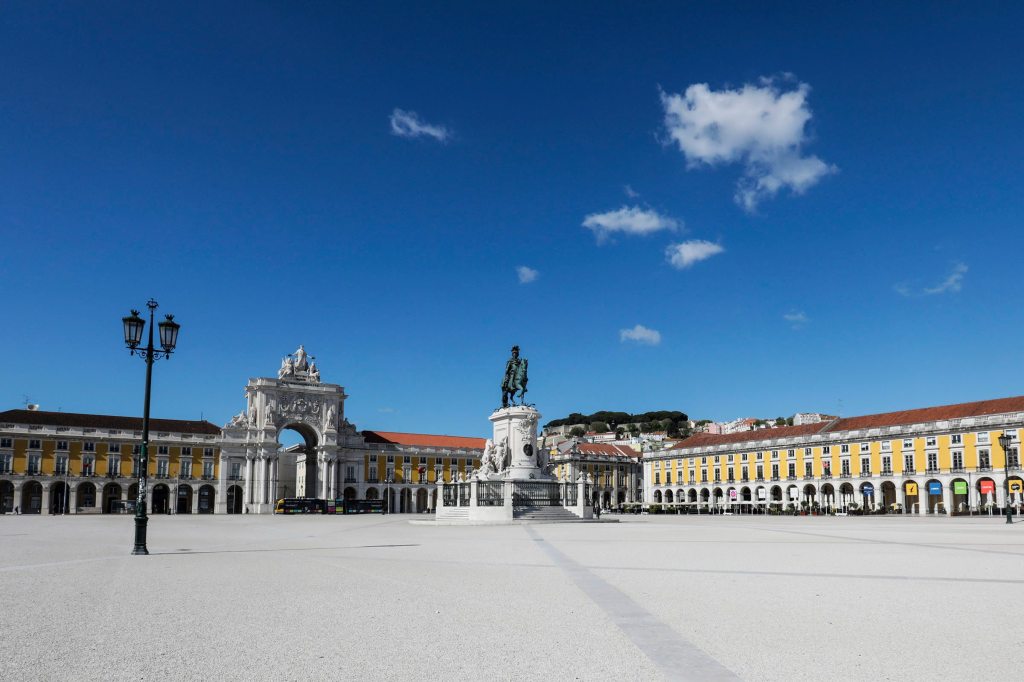
To see the world’s most famous squares, urban parks and business centers totally empty for such a long period makes us think that smart democratic ways must be found for the citizens to be able to use them back again.
In certain parts of the world, Big Data and georeferencing tools are being used to survey the population as a way to control the pandemic. This can be a dangerous process that might put at stake the freedom of movement and proper meaning of Public Space.
In the end, the exception cannot become the rule. Extreme control over the movement of citizens might as well end in a limitation of our liberties, beyond the time the present crisis lasts.
 arkollective.com
2 thoughts on “Coronavirus Made Visible”